How We Calculate ARV Before Buying a Flip
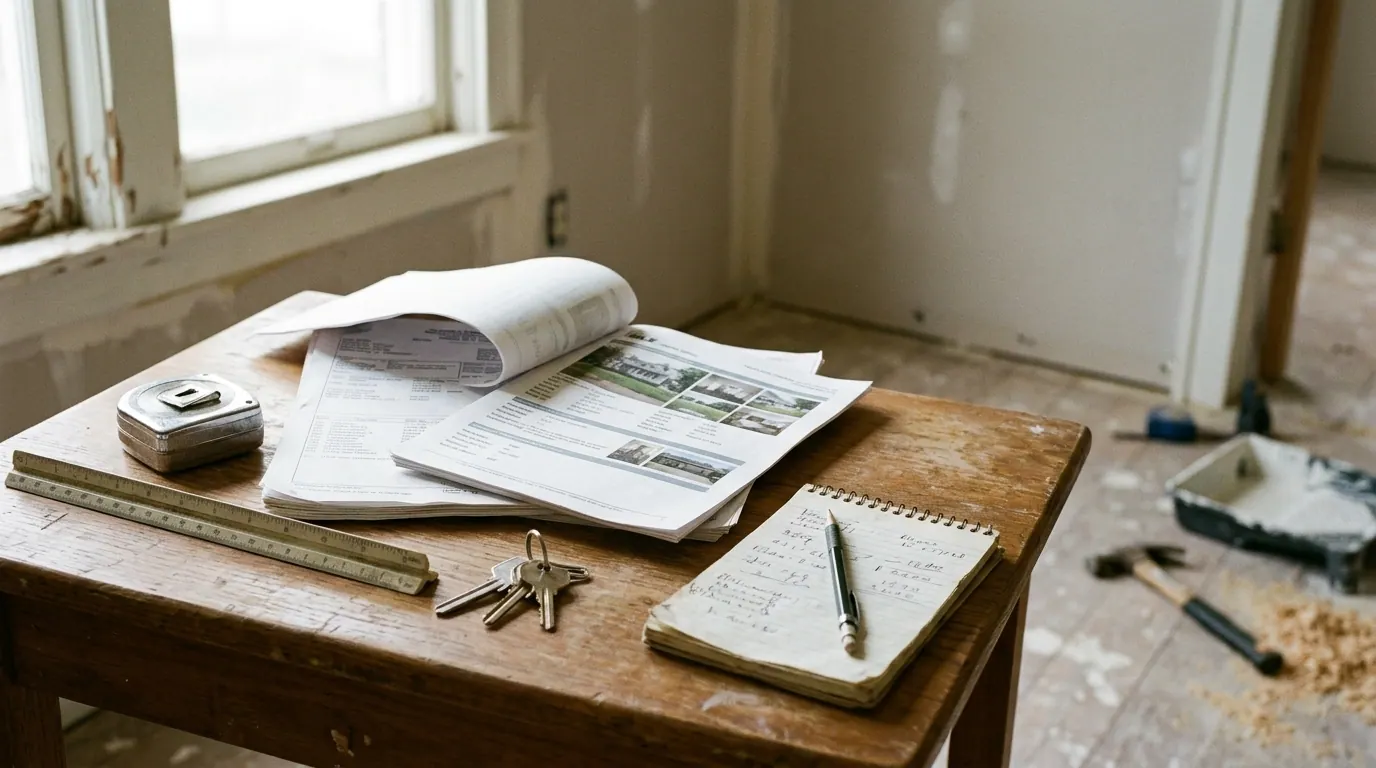
Generated (Gemini), via Wikimedia Commons
ARV, or after-repair value, is your best estimate of what a house will sell for once the renovation is done. Get it wrong by even 10% and your whole deal can flip from profitable to underwater. This is for anyone about to make an offer on a flip, whether it's your first project or your fifteenth, and it takes an afternoon with comps and a spreadsheet, not a gut feeling.
What you need
- Access to an MLS or a real estate agent willing to pull comps for you
- At least 3 to 6 recently sold comparable properties, sold within the last 3 to 6 months if possible
- Square footage, lot size, bed/bath count, and year built for the subject property and each comp
- Photos of comp interiors, either from the listing history or Zillow/Redfin archives
- A rough scope of work for the subject property so you know what condition it will end up in
- A spreadsheet or notepad for price-per-square-foot math
Step by step
- Pull true comps, not just nearby listings. A comp needs to be within about half a mile to a mile depending on how dense the market is, sold in the last 3 to 6 months, and similar in size (within 15-20% of square footage), bed/bath count, and lot size. Active listings and pending sales tell you what sellers hope for, not what buyers actually paid. Only closed sales count.
- Adjust each comp to match your subject property. If a comp has an extra bedroom, subtract value. If it has an updated kitchen and yours will too, no adjustment needed. If it has a finished basement and your subject won't, subtract that value. Common adjustment ranges: an extra bathroom is worth roughly $5,000 to $15,000 depending on market, a finished basement roughly $10 to $25 per square foot of the space, a garage roughly $5,000 to $20,000. These are rough ranges and vary a lot by region, so use local averages if you have them.
- Calculate price per square foot from your adjusted comps. Take each comp's adjusted sale price and divide by its square footage. Throw out any outlier that's more than 15-20% off the others, since that usually means something wasn't accounted for, like a lot line dispute or a rushed sale. Average the remaining comps to get a price-per-square-foot figure for the neighborhood at the finish level you're targeting.
- Multiply by your subject property's square footage and sanity-check against the whole picture. Take your price-per-square-foot number and multiply by the subject's total square footage. Then step back and ask if the number feels right compared to recent list prices, local agent opinion, and the overall condition of the block. If your ARV comes out well above every other house on the street, you've probably overestimated the finish level buyers will pay for in that location.
Where this goes wrong
The single biggest mistake is comparing your future renovated house to comps that were fully renovated by someone else 8 months ago, in a market that's since cooled. Prices move. A comp from last spring in a market that's dropped 5% since then will overstate your ARV. Always check the trend line for the neighborhood, not just the raw numbers.
Another common error is picking comps that are technically nearby but not really comparable. A 1,200 square foot bungalow three streets over doesn't tell you what a 2,000 square foot colonial will sell for, even if it's in the same zip code. School district lines, busy road proximity, and even which side of a single street you're on can swing value by tens of thousands of dollars in some markets. Flippers who skip this and just average "everything within a mile" end up with a mushy, unreliable number.
People also tend to over-adjust for their own planned finishes. You might be putting in quartz counters and a tile backsplash, but if none of the comps have that finish level and the neighborhood doesn't support it, you won't get full credit for it at resale. Buyers pay for what's normal for the block, plus a little. They rarely pay a premium for a renovation that's nicer than everything else around it. This is sometimes called "overimproving," and it's a real way to lose money even on a technically well-done renovation.
A quieter mistake is ignoring days-on-market and sale concessions. A comp that sold in 4 days at full price tells a different story than one that sat for 90 days and closed after a price cut and seller-paid closing costs. If most of your comps needed concessions to sell, your real ARV is probably a bit lower than the sticker prices suggest.
Finally, some investors calculate ARV once at the start and never revisit it. Renovations take months. If the market shifts during your project, in either direction, your ARV should shift with it. Checking again 4 to 6 weeks before listing, using fresher comps, catches this before it costs you at closing.
When to stop and call someone
If you're new to a market or the comps are thin, get a local real estate agent to run a comparative market analysis alongside your own numbers. Agents see pending sales and off-market chatter that don't show up in public records, and a second opinion is cheap insurance before you commit six figures to a purchase.
If the property has anything unusual, like a nonstandard layout, a flood zone designation, easement issues, or it's the only house of its type on the street, don't trust a simple price-per-square-foot average. Get a licensed appraiser to do a full appraisal before you make an offer. Appraisals typically run $400 to $700 and they're worth it when the comps don't cleanly apply.
And if your ARV estimate and your total project cost (purchase price plus renovation budget plus holding costs plus selling costs) come out within 10% of each other, walk away or renegotiate. That's not a safety margin, that's a deal that only works if everything goes perfectly, and renovations rarely do. Fixer Files has covered plenty of flips where a tight margin on paper turned into a loss once unexpected repairs showed up, and the ARV estimate is usually the first place to double check when a deal feels too good.
Get the real numbers
Every renovation post includes the actual costs. Join the list and get each new breakdown as it goes up.
Join the list