The Foundation Crack That Ate Our Renovation Budget
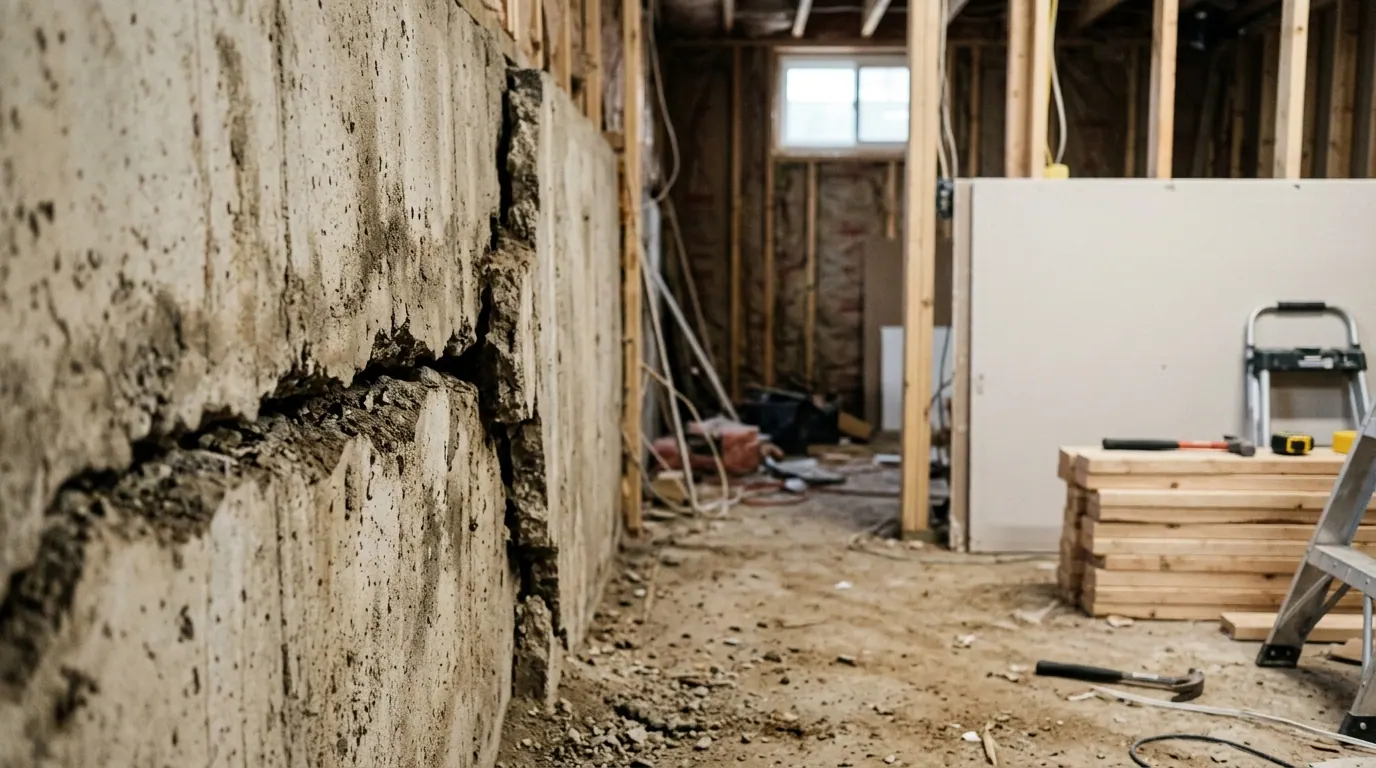
Generated (Gemini), via Wikimedia Commons
A foundation crack is not automatically a disaster. Most are cosmetic. But the ones that are not can turn a $40,000 kitchen-and-bath renovation into a $90,000 project with a three-month delay, because everything else in the house has to wait until the structure is confirmed sound. This post is for anyone who has found a crack, is staring at a quote for foundation repair, and wants to know whether they are looking at a $500 fix or a $50,000 one.
Decide this first
The single variable that determines everything downstream is whether the crack is active or dormant. An active crack is still moving: it gets wider, it lets in water after every rain, or it lines up with doors and windows that are newly sticking. A dormant crack has stopped moving and is just old damage. You cannot tell the difference by looking once. You tell the difference by monitoring it, and that decision (monitor first vs. call an engineer now) shapes your whole budget and timeline.
What to look for
Crack width and direction
Hairline cracks under about 1/16 inch, especially vertical ones in poured concrete, are common as concrete cures and usually not structural. Cracks wider than 1/8 to 1/4 inch, or ones that run diagonally at 45 degrees from a corner, or horizontal cracks across a foundation wall, are the ones that get expensive. Horizontal cracks in particular can mean the wall is bowing from soil pressure outside, and that is a different repair category entirely from a settling crack.
Water intrusion
A crack that lets water through after heavy rain is not just a foundation problem, it is a mold, framing rot, and flooring problem waiting to happen. Even a narrow crack that weeps water regularly will cost you more in secondary damage over a few years than it would to seal properly now. If you see efflorescence (the white chalky residue) or a musty smell in the basement, water has been getting in for a while, whether or not you have seen it happen.
Movement over time
This is the part people skip because it is boring. Put a pencil mark and a date at each end of the crack, or use a $10 crack monitor gauge, and check it monthly. If a crack widens more than about 1/16 inch over a few months, that is active movement and it changes the conversation from cosmetic patching to structural repair. Skipping this step is how people end up either overpaying to fix a dormant crack like it's an emergency, or underpaying to patch an active one that reopens in a year.
What to ignore
Ignore contractors who quote a foundation repair price over the phone or from photos alone. Foundation work is one of the few trades where an accurate quote genuinely requires an in-person inspection, sometimes with soil testing. Also ignore branded repair systems marketed as uniquely superior (certain carbon fiber strap systems, proprietary injection resins, and so on). The underlying methods, epoxy injection, polyurethane injection, carbon fiber staples, steel I-beams, helical piers, are fairly standardized across the industry. The brand name on the product matters much less than whether the person installing it correctly diagnosed the cause of the crack in the first place.
Also ignore the idea that a lifetime warranty means the company will still exist in ten years, or that it covers everything. Read what's actually excluded. Many foundation repair warranties do not cover new cracks that form elsewhere on the same wall, only the specific repaired section.
Common mistakes
The most expensive mistake is treating a foundation crack as a cosmetic renovation line item instead of a structural question. People budget $800 for "foundation crack repair" based on a quick internet search, then get an engineer's report mid-renovation saying the wall needs steel bracing or helical piers, and the number jumps to $8,000 to $25,000 depending on the length of wall affected and the depth of the piers needed. That gap between the DIY-repair number people expect and the structural-repair number they sometimes get is the single biggest budget-buster on this list.
The second mistake is doing cosmetic work first. New flooring, drywall, or a finished basement built over an unresolved active crack means redoing that finish work once the structural fix happens, because pier installation or wall bracing often requires removing the very flooring or drywall that was just installed. This is how a $15,000 basement finish becomes a $22,000 basement finish with nothing extra to show for it. The right order is always: diagnose and fix structure, then finish.
The third mistake is assuming the general contractor's opinion on foundation issues is enough. Most GCs are not structural engineers, and a foundation issue is exactly the kind of thing where a $400 to $900 structural engineer's report can save five figures. An engineer's report also matters if you plan to sell later, because buyers' inspectors will ask for documentation that any past crack was properly evaluated and repaired, not just patched.
What foundation repairs actually cost
These are honest ranges, not quotes, and they vary a lot by region, soil type, and access to the foundation:
- Epoxy or polyurethane crack injection (non-structural, sealing water): roughly $400 to $1,500 per crack.
- Carbon fiber strap reinforcement for a bowing wall, non-excavation: roughly $350 to $1,000 per strap, with most walls needing several.
- Steel I-beam bracing for a bowing wall: roughly $500 to $1,000 per beam installed, several beams typical.
- Helical piers or push piers for settlement, per pier: roughly $1,000 to $3,000 each, and a corner of a house might need four to eight piers.
- Full wall replacement or excavation and rebuild of a section: this is where numbers jump into the $15,000 to $40,000-plus range, and it is the outcome you most want to catch early.
The gap between the low end and high end of that list is exactly why the "decide this first" question matters so much. A dormant hairline crack and an actively bowing wall can look almost identical to an untrained eye, and the repair cost between them can be a factor of twenty.
How this actually plays out on a renovation timeline
On a typical renovation schedule, a foundation issue discovered during demo or during a pre-purchase inspection adds real time in three places. First, getting a structural engineer out for an assessment typically takes one to three weeks depending on your area, longer if you need someone with soil expertise for a piering job. Second, if piers or excavation are needed, permits for structural work take longer to pull than cosmetic permits, often two to six weeks depending on your municipality. Third, the actual repair work, once scheduled, can take anywhere from a single day for injection repair to two or three weeks for a multi-pier job with excavation. Add it up and a moderate structural fix easily adds four to eight weeks to a project that was supposed to take three months, plus the cost.
This is the part TV renovation shows skip. They compress a six-week structural delay into a ten-second clip of someone looking concerned at a crack. In a real project, that six weeks means paying rent somewhere else, paying interest on a renovation loan with no income coming in, and telling contractors on other trades that their start dates are pushed. The dollar cost of the repair itself is often smaller than the carrying cost of the delay.
FAQ
Can I just fill the crack myself and move on?
For a hairline, dormant, vertical crack with no water intrusion, a DIY epoxy or hydraulic cement patch (around $20 to $50 in materials) is often reasonable. But that assumes you have actually confirmed it is dormant and non-structural. If you have not monitored it for movement or had it looked at, a DIY patch just hides the problem behind fresh material, and you lose your visual evidence of whether it is still moving.
Does homeowners insurance cover foundation crack repair?
Usually not. Most standard homeowners policies exclude foundation settlement, soil movement, and gradual damage, which covers the majority of foundation cracks. Coverage sometimes applies if the crack results from a covered peril like a plumbing leak that undermined the soil, but that requires proving the cause, which is another reason an engineer's report is worth having.
Should a foundation crack stop a renovation entirely?
Not automatically, but it should stop any work that would need to be redone if structural repair happens later, meaning finish flooring, drywall, and cabinetry near the affected wall. Get the engineer's assessment first, even if it adds a couple of weeks, because building around an unresolved structural question is how budgets get eaten twice.
If you are working through something similar right now, this is the kind of real-cost breakdown we try to keep documenting at Fixer Files, because the actual numbers rarely match what gets shown on TV.
Get the real numbers
Every renovation post includes the actual costs. Join the list and get each new breakdown as it goes up.
Join the list