Subfloor Rot: What It Costs to Fix and How to Spot It Early
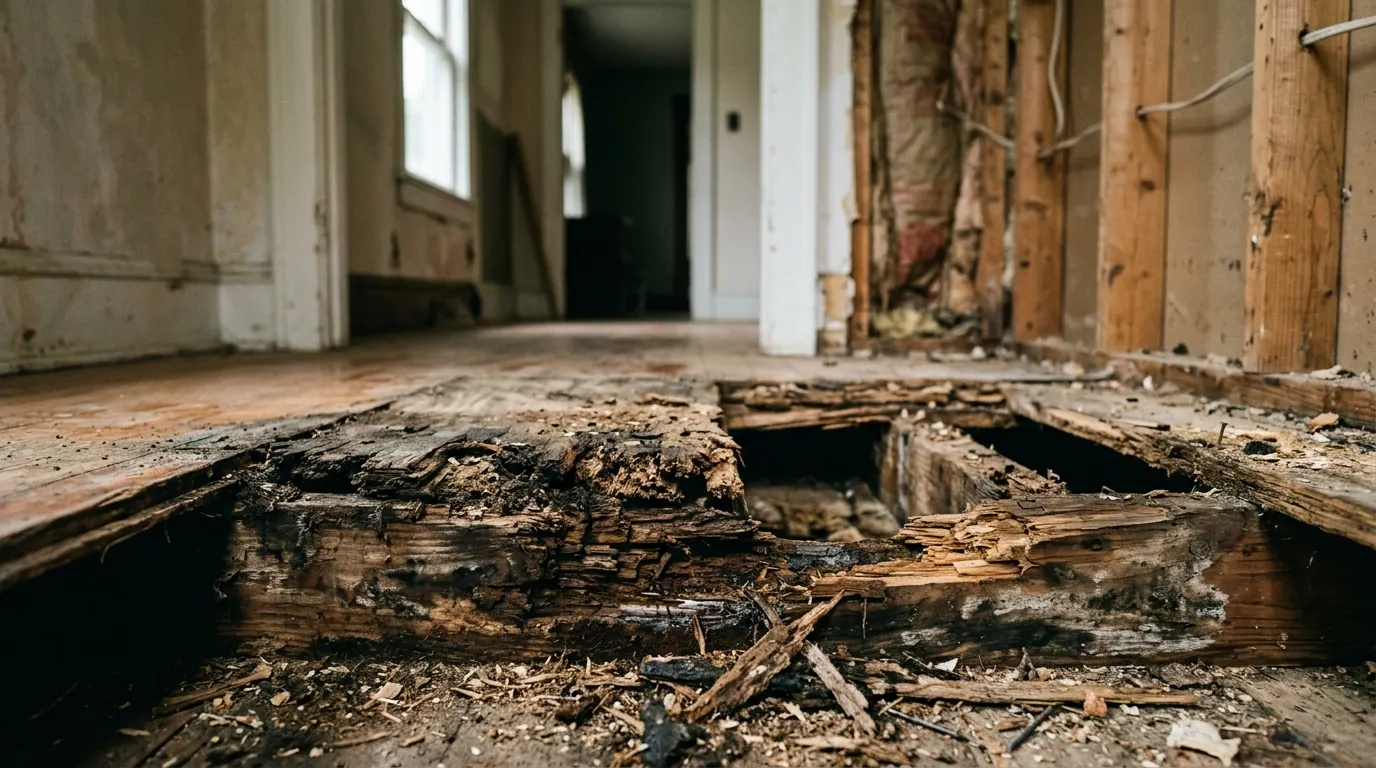
Generated (Gemini), via Wikimedia Commons
Small subfloor rot around a toilet or under a leaky dishwasher usually runs $400 to $1,500 to fix. Rot that's spread across a bathroom or kitchen, or that's traveled down into floor joists, can run $3,000 to $15,000 once you add framing repair, permits, and finish flooring. The number that matters most isn't the repair cost, it's how early you catch it, because rot spreads while nobody's looking.
Key takeaways
- Bathrooms, kitchens, and laundry rooms cause most subfloor rot, because that's where water leaks and nobody notices for months.
- A spongy or bouncy floor is a symptom, not the whole diagnosis. The rot underneath is often bigger than what you feel with your foot.
- Small patch jobs run $400 to $1,500, but rot that reaches the joists pushes costs into the thousands fast.
- A $30 moisture meter and a flashlight in the crawlspace will catch most problems before an inspector charges you $400 to find the same thing.
- Ignoring it doesn't save money. It just moves the repair from a floor patch to a structural rebuild.
How do you actually find subfloor rot before you buy or renovate?
Start with your feet. Walk every room slowly, especially bathrooms, kitchens, laundry areas, and anywhere near an exterior door. Soft spots, bounce, or a slight give under your weight means the plywood or OSB underneath has lost structural integrity. A healthy subfloor feels solid no matter where you step. If one spot flexes more than the rest of the room, that's your starting point, not your whole problem.
Next, get under the house if you can. A crawlspace or open basement ceiling tells you more in ten minutes than any surface inspection. Look at the underside of the subfloor and the tops of the joists for dark staining, white mineral trails from mineral deposits in leaked water, or a fuzzy, cottony growth that means active fungal decay. Push a screwdriver or awl into any suspicious wood. Sound wood resists the point. Rotted wood lets it sink in with almost no pressure, sometimes crumbling like wet cardboard.
On the main floor, check around toilets first. A toilet that rocks slightly, has a hairline crack in the wax ring area, or leaves a faint ring of discoloration on the floor around its base is one of the most common rot sources in any house. Check under dishwashers and around refrigerator ice lines next. These appliances leak slowly, quietly, and for a long time before anyone notices a puddle.
A cheap moisture meter, the kind with two metal pins that you press into wood, costs $25 to $40 and pays for itself the first time you use it. Readings above 20% moisture content in wood framing mean active or recent water intrusion. Anything above 28% to 30% usually means active decay is possible or already underway. This isn't a replacement for a professional inspection on a house you're about to buy, but it's a fast way to flag rooms that need a closer look before you sign anything.
What actually causes subfloor rot, and where does it hide?
Rot needs three things: wood, prolonged moisture, and time. Take away any one of those and it doesn't happen. In practice, the moisture almost always comes from one of a short list of sources, and knowing the source tells you where to look.
- Toilet wax ring failures: a slow leak at the base of the toilet, often invisible until the floor is already soft.
- Shower and tub surrounds: cracked grout or caulk lets water behind the wall and down into the subfloor at the base of the tub.
- Dishwasher and washing machine supply lines: slow drips that get soaked up by cabinet toe kicks and flooring before anyone sees standing water.
- Exterior door thresholds and sliding doors: rain wicks in under the threshold over years, especially on doors without a proper pan flashing.
- Roof and plumbing leaks from above: water travels along framing members before it shows up as a stain, so the wet subfloor on the first floor might be caused by a leak two floors up.
One thing that commonly goes wrong: people assume the rot is contained to the footprint of the leak. It rarely is. Water follows gravity and grain, running along joists and soaking into subfloor sheets well beyond the visible stain. A homeowner budgets to replace a 2-foot by 2-foot section under a toilet, opens it up, and finds soft wood running three feet in every direction along the joist bay. That's the moment budgets double.
What does it cost to actually fix, room by room?
Costs vary a lot by region, by whether you hire a licensed contractor or a handyman, and by how far the damage has spread. These are general ranges, not quotes, but they reflect what real jobs tend to run.
- Small localized patch (one toilet flange area, subfloor only): $400 to $1,200. This assumes the joists underneath are still sound and you're replacing a section of plywood or OSB plus resetting the toilet.
- Bathroom floor replacement (full room, subfloor plus new flooring): $1,500 to $4,000, more if tile is being removed and reset rather than replaced with vinyl or laminate.
- Kitchen subfloor repair under a dishwasher or sink run: $800 to $3,000, depending on cabinet removal and whether the rot reached the toe kick framing.
- Joist sistering or replacement (adding new lumber alongside a rotted joist, or cutting out and replacing it): $150 to $400 per joist for materials and labor in straightforward crawlspace access, more if the area is hard to reach or load-bearing walls are involved.
- Whole-room structural rebuild (subfloor, joists, possibly a beam or support post): $5,000 to $15,000+, especially if permits, engineering review, or mold remediation get added in.
Two cost multipliers to watch for. First, tile floors. Removing tile to get at rotted subfloor is slow, dusty work, and the tile usually can't be reused, so you're paying for demo and full re-tile even if the rot itself was minor. Second, mold. Any rot that's been wet for a while, especially in a bathroom or basement, often comes with mold growth on the framing. Remediation adds $500 to $3,000 depending on the extent, and some contractors won't touch the framing repair until remediation is done and documented.
When should you call a professional instead of handling it yourself?
A single small patch, say a 2-foot section of plywood under a toilet with solid joists underneath, is a reasonable DIY project for someone comfortable with basic carpentry and a circular saw. Materials run under $100 for the subfloor patch itself, plus a new wax ring and flange if needed.
Call a professional once the rot involves joists, spans more than a couple of feet, or touches a load-bearing wall or support beam. Structural work has real consequences if it's done wrong, and a floor that feels solid today but was patched incorrectly can fail later in a way that's much more expensive and, occasionally, dangerous. A structural engineer's opinion, usually $300 to $700 for a single visit, is cheap insurance before any repair that involves cutting or replacing joists.
You should also call in a professional, or at least a home inspector with a moisture meter, before buying any house with visible water stains, musty basement smell, or a bathroom that's been recently and suspiciously re-tiled. Fresh tile over an old bathroom floor is sometimes just a remodel. It's also sometimes a cover for rot the seller doesn't want you to find. A $300 to $500 inspection add-on for moisture testing is a small price against a repair that could run into five figures.
FAQ
Can subfloor rot cause the floor to actually collapse?
In severe, long-neglected cases, yes. If the joists themselves have rotted through and lost their load-bearing capacity, a floor section can fail under normal weight. This is rare and usually preceded by months or years of visible warning signs like sagging, bounce, and soft spots that nobody addressed.
Is subfloor rot covered by homeowners insurance?
Usually not, unless the water damage was sudden and accidental, like a burst pipe. Slow leaks, like a failing wax ring or a dripping supply line, are typically classified as a maintenance issue, which most policies exclude. Check your specific policy language before assuming coverage.
How do I know if the rot has stopped or is still active?
Fix the moisture source first, then check with a moisture meter over a few weeks. If readings stay low and stable, and there's no fresh staining or soft growth, the rot has likely stopped progressing. Active fungal growth, a musty smell, or rising moisture readings mean water is still getting in somewhere.
The bottom line
Subfloor rot is one of those problems that's cheap to catch early and expensive to catch late. A flashlight, a moisture meter, and twenty minutes checking bathrooms, kitchens, and the crawlspace will tell you more than most people bother to find out before they buy or renovate. If you write about this kind of thing the way we do at Fixer Files, the pattern repeats on almost every project: the repair itself was never the expensive part. The delay was.
Get the real numbers
Every renovation post includes the actual costs. Join the list and get each new breakdown as it goes up.
Join the list