Bathroom Remodel Cost Breakdown: Budget vs Mid-Range vs High-End
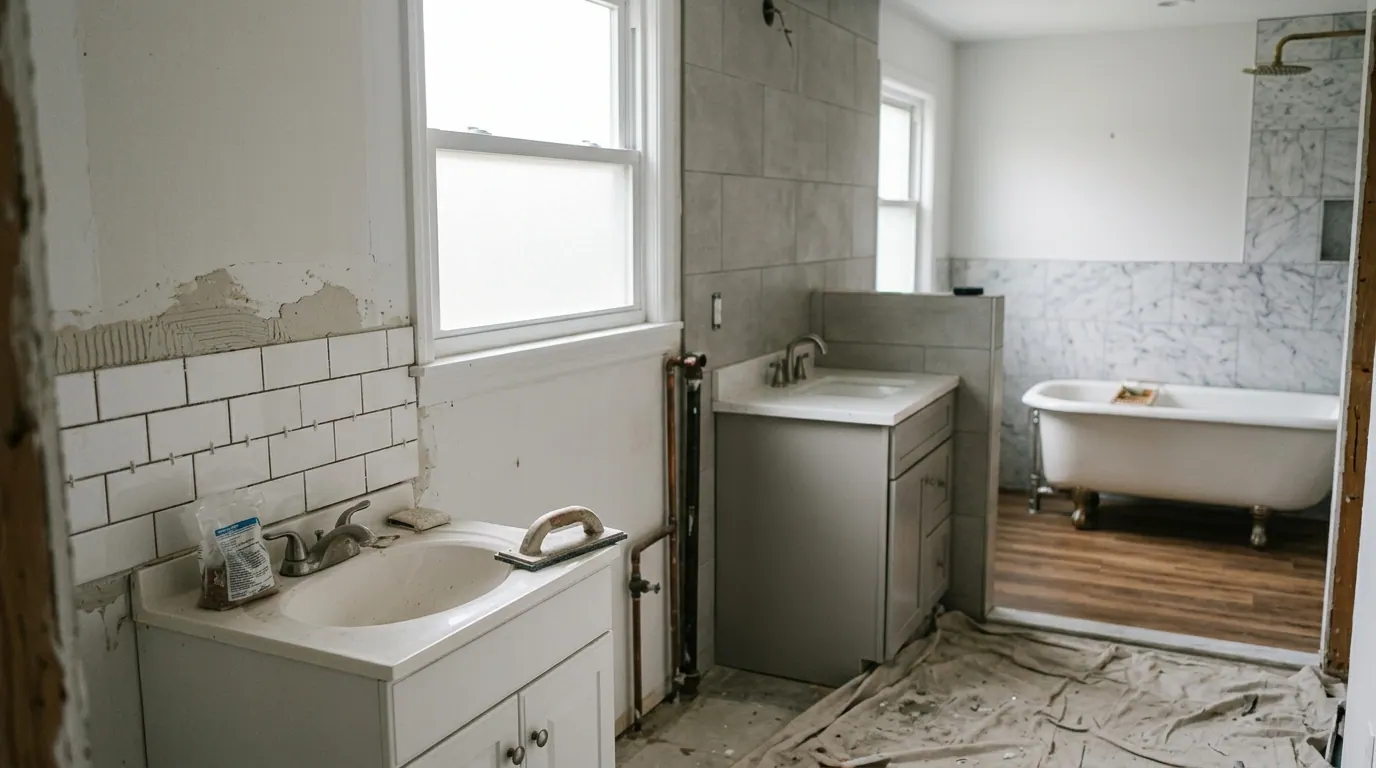
Generated (Gemini), via Wikimedia Commons
A bathroom remodel runs anywhere from about $8,000 to $75,000 or more, and almost all of that spread comes down to three things: whether you move plumbing, what materials you pick, and who does the labor. For a standard 5x8 bathroom with the layout left alone, expect roughly $8,000 to $15,000 for a budget job, $15,000 to $30,000 for mid-range, and $35,000 and up for high-end. Bigger bathrooms or anything with a soaking tub, custom tile, or a layout change push past those numbers fast.
These figures are general ranges, not quotes. Labor rates, tile pricing, and permit fees vary a lot by region, and a bathroom in a 100-year-old house almost never behaves like a bathroom in a 2005 build. Use the breakdown below to sanity-check estimates, not to predict your exact invoice.
What actually drives the price at every tier
Two things separate a $10,000 bathroom from a $50,000 bathroom: labor complexity and material grade. Labor complexity means whether the plumbing and electrical stay where they are. Moving a toilet flange, relocating a shower drain, or shifting a vanity to a new wall means opening the floor or walls, which adds plumber and sometimes framer time before a single tile goes down. That single decision can add $2,000 to $8,000 before you've picked a faucet.
Material grade is the more visible driver. A budget bath uses stock vanities, ceramic tile, a fiberglass tub-shower insert, and standard fixtures. Mid-range swaps in semi-custom cabinetry, porcelain tile, and a tiled shower pan instead of a molded insert. High-end means custom cabinetry, natural stone or large-format porcelain, frameless glass, a freestanding tub, and often radiant floor heat. Labor to install a $3 tile and a $30 tile is nearly the same per hour, so the material choice alone can double the budget without changing the scope of work at all.
Hidden costs that blow past the estimate
The number one thing that turns a $15,000 job into a $22,000 job is what's behind the old tile. Once demo starts, a few things commonly show up:
- Water damage in the subfloor: a leaking tub or toilet flange over years can rot plywood or subfloor joists. Confirm by checking for soft or bouncy floor near the tub and toilet before demo, but the real answer only shows up once the flooring is pulled. Budget $500 to $2,500 for subfloor repair as a contingency, more if joists need sistering.
- Old galvanized or cast iron plumbing: in houses built before the 1960s, pipes behind the wall may be too corroded to reuse. A plumber can often tell by the water pressure and pipe material visible under the sink, but full confirmation happens when the wall opens. Repiping a bathroom's supply and drain lines typically adds $1,500 to $4,000.
- Mold or improper venting: a bathroom fan that vents into the attic instead of outside, or no fan at all, causes hidden moisture damage in the ceiling and framing. Check the attic for staining around the bath location or look for a fan duct that dead-ends instead of reaching a roof or wall vent. Fixing venting properly runs $300 to $1,200 depending on duct run length.
None of these are guaranteed. Plenty of remodels open a wall and find everything in good shape. But a contractor who doesn't build in a contingency line for these is either very confident or not being straight with you. A 10 to 15 percent contingency on top of any quote is standard for this reason.
The three tiers, item by item
Here's roughly how a 5x8 to 8x10 bathroom breaks down at each level. These are rough shares of a total budget, not fixed dollar amounts, since square footage and region shift everything.
- Budget ($8,000-$15,000): stock 30-36 inch vanity with laminate or cultured marble top, ceramic tile floor, fiberglass or acrylic tub-shower insert, standard chrome fixtures, builder-grade toilet, no layout changes, contractor-grade paint and trim. Labor is usually the biggest single cost here because even a basic job needs a plumber, electrician for code-compliant GFCI and fan wiring, and a tile setter or installer.
- Mid-range ($15,000-$30,000): semi-custom vanity with quartz or solid-surface top, porcelain tile floor and shower walls, a tiled shower pan or a better-quality tub, upgraded fixtures and lighting, a comfort-height toilet, and often a small layout tweak like widening a doorway or adding a linen closet. This tier is where most homeowners land because it looks and lasts noticeably better than budget without the custom-everything price tag.
- High-end ($35,000-$75,000+): full layout change, custom cabinetry, natural stone or large-format porcelain with mitered edges, frameless glass shower enclosure, freestanding soaking tub, radiant floor heat, designer fixtures, and often a heated towel bar or built-in niche lighting. Labor here includes more skilled trades and more hours per trade, since custom work takes longer to install correctly than anything off the shelf.
Across all three tiers, labor typically runs 40 to 65 percent of the total cost. Materials and fixtures make up the rest, plus permit fees, which run from a few hundred dollars to over a thousand depending on whether plumbing or electrical work is included and how your local jurisdiction handles inspections.
When a full remodel is not worth it
If the bathroom is structurally sound, the layout works, and the only problem is dated finishes, a full gut is often overkill. Reglazing a tub, replacing a vanity top, re-grouting or re-caulking, and painting can refresh a tired bathroom for $1,500 to $4,000 and get most of the visual improvement without touching plumbing or walls.
For flippers and investors, the math matters more than taste. A high-end remodel rarely returns its full cost at resale unless the house is already in a high-end neighborhood where buyers expect that level of finish. In most markets, a clean mid-range remodel recovers a solid share of its cost and sells the house faster, while a high-end bathroom in a modest neighborhood is money the market won't pay back. If you're renovating to sell, price out what comparable homes on your street actually have in their bathrooms before committing to stone and frameless glass.
And if the subfloor or plumbing problems turn out to be extensive, sometimes the honest move is a smaller scope: fix what's broken, keep the layout, and put the rest of the budget into finishes instead of structural surprises. We track jobs like this at Fixer Files because the gap between the estimate and the final number is usually where the real lessons are.
Get the real numbers
Every renovation post includes the actual costs. Join the list and get each new breakdown as it goes up.
Join the list