Before and After: Turning a Dated Bathroom Into a Rental-Ready Space
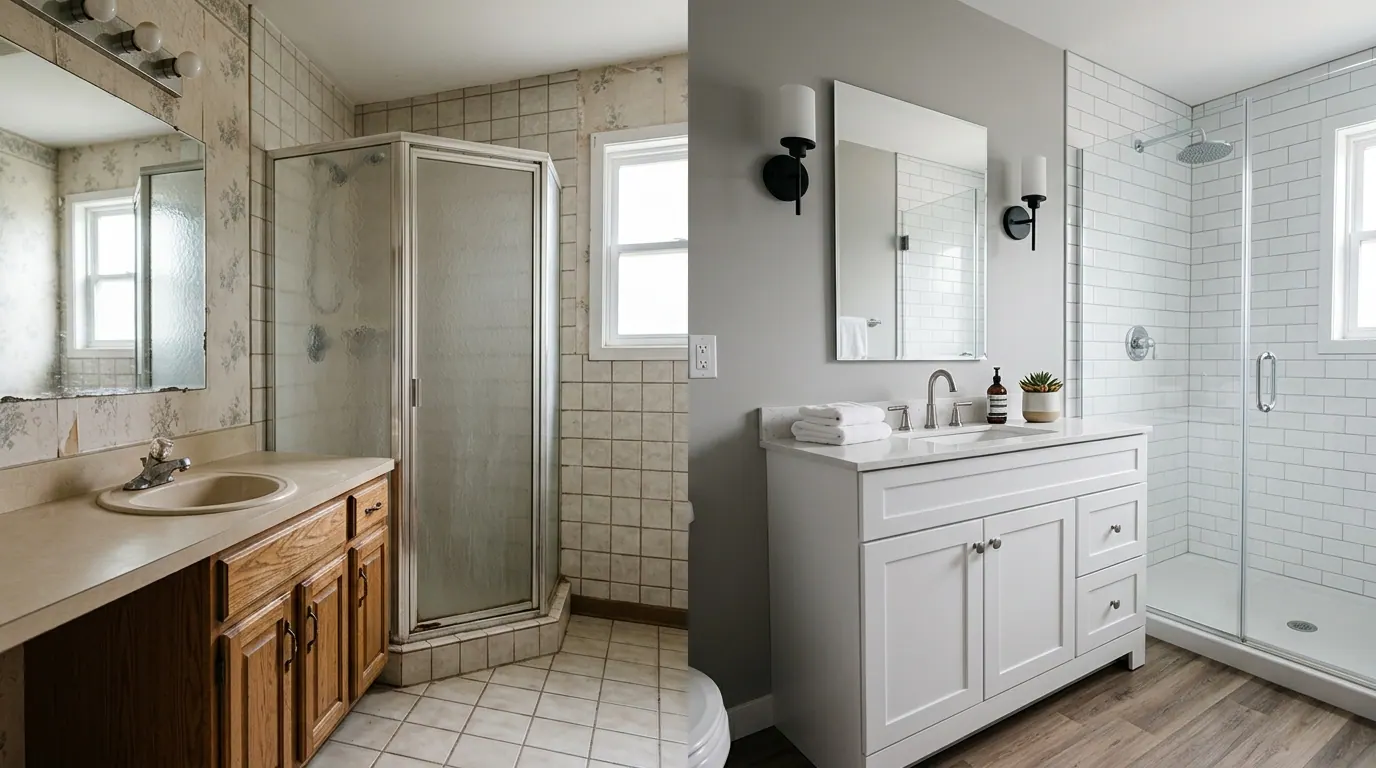
Generated (Gemini), via Wikimedia Commons
A rental bathroom renovation is not a luxury remodel. The goal is durability, code compliance, and a space that photographs well on a listing without needing heated floors or a rain shower. Most of these jobs land somewhere between $4,000 and $12,000 depending on whether plumbing and electrical need to be touched, and the dated bathrooms that trigger these projects tend to look remarkably similar from property to property.
What the problem actually looks like
The bathrooms that need this kind of work share a look. Pink, mint, or almond tile from the 1960s through the 1980s, often with matching fixtures. A vanity with a laminate top that has swollen at the edges from years of standing water. Grout that has gone from white to grey to black in the corners. A toilet that runs constantly or rocks slightly when you sit down. An exhaust fan that either doesn't work or was never installed, which shows up as peeling paint on the ceiling near the shower.
Lighting is usually a single fixture over the mirror, often with one bulb burned out. The flooring is frequently vinyl sheet that has lifted at the seams, or tile with cracked grout lines that let water get underneath. None of this is dramatic on its own, but it adds up to a bathroom that reads as neglected, which matters a lot to a prospective tenant walking through a unit for the first time.
Why it happens
Rental properties get deferred maintenance by design, not by accident. A landlord who plans to hold a property for ten years has little financial incentive to update a bathroom that still technically functions. Tenants rarely demand bathroom renovations as a condition of signing a lease, so the fixtures stay until something actually breaks.
The other driver is layering. Instead of a full renovation, most rental bathrooms get patched over decades. A cracked tile gets caulked instead of replaced. A broken fan gets removed and capped rather than repaired. A failing wax ring under the toilet gets a second wax ring stacked on top instead of a proper reseat. Each patch solves the immediate problem but adds a small amount of risk, and none of it shows up until a new owner or property manager opens the walls.
Moisture is the quiet factor underneath all of this. Bathrooms built before modern vapor barrier standards and before exhaust fans were code-required in most jurisdictions tend to have slow-moving water damage behind the tile that nobody has looked at in years. It is common to pull tile off a 1970s shower surround and find soft drywall or even rotted framing behind it, even when the surface looked fine.
What we do about it
The first step, before any demo, is turning off water to the fixtures and confirming the condition of the shutoff valves. On older bathrooms these valves often don't fully close, which is a $15 to $40 part but a real time cost if it means a plumber has to be scheduled before work can start.
From there the typical sequence looks like this:
- Demo the tile, vanity, and toilet, and inspect the subfloor and wall framing for water damage. This is the point where budgets either hold or blow up, since hidden rot behind an old tub surround can add $500 to $2,000 in framing and subfloor repair.
- Replace or reroute any plumbing that is galvanized pipe or shows corrosion. Not every job needs this, but it is common in houses built before the 1970s.
- Install a proper exhaust fan if one doesn't exist, vented to the exterior, not just into the attic. Code requirements vary by area, so this is worth checking locally rather than assuming.
- Waterproof the shower or tub surround properly before tiling, using a membrane system rather than relying on grout and caulk alone.
- Choose durable, neutral finishes: porcelain tile, a simple one-piece or two-piece toilet, a solid surface or cultured marble vanity top, and a mid-grade faucet. Rental-grade materials don't need to be cheap, they need to resist wear and be easy to clean.
- Update lighting to a vanity bar with enough bulbs to actually light the mirror, and add a GFCI outlet near the sink if the existing one isn't protected, which is a safety issue as much as a cosmetic one.
On labor and materials, a reasonable range for this scope is $6,000 to $10,000 for a small to mid-size bathroom, assuming no major structural surprises. Adding a fan and rerouting plumbing can push that toward $12,000. Skipping the vanity top and toilet replacement and just doing tile, paint, and fixtures can bring a cosmetic-only refresh down to $3,000 to $5,000, though that route leaves the older plumbing and any hidden moisture issues unaddressed.
What it costs to ignore
Ignoring a dated, deteriorating bathroom costs money in several places at once. A failing wax ring or slow leak under a tub can cause subfloor rot that turns a $1,500 tile job into a $4,000 structural repair once it's finally addressed. Mold from an unvented bathroom is a serious issue in a rental, both for tenant health complaints and for liability, and remediation costs climb fast once it spreads into wall cavities.
There's also a rent and turnover cost that's easy to underestimate. A dated bathroom is one of the top reasons prospective tenants walk away from an otherwise decent unit, and it directly affects how much rent a unit can command. Updated bathrooms and kitchens are consistently the two rooms that move the needle most on rental listings, more than fresh paint or new carpet anywhere else in the unit.
We've tracked this kind of project across several properties for Fixer Files, and the pattern holds: a $7,000 to $9,000 bathroom renovation on a rental often pays for itself within one to two years through higher rent and lower vacancy time, assuming the rest of the unit is in reasonable shape.
FAQ
Do I need a permit for a rental bathroom renovation?
If you're moving plumbing, adding or rerouting electrical, or doing structural repair, most jurisdictions require a permit. Cosmetic work like tile, paint, and fixture swaps without moving anything usually doesn't. Check with your local building department, since this varies a lot by city and county.
How long does a project like this actually take?
For a straightforward scope with no structural surprises, two to three weeks is realistic, including demo, any plumbing or electrical work, waterproofing cure time, tile, and finish work. Hidden damage behind old tile surrounds is the most common thing that extends the timeline.
Get the real numbers
Every renovation post includes the actual costs. Join the list and get each new breakdown as it goes up.
Join the list