Five Things We'd Do Differently on Our Last Flip
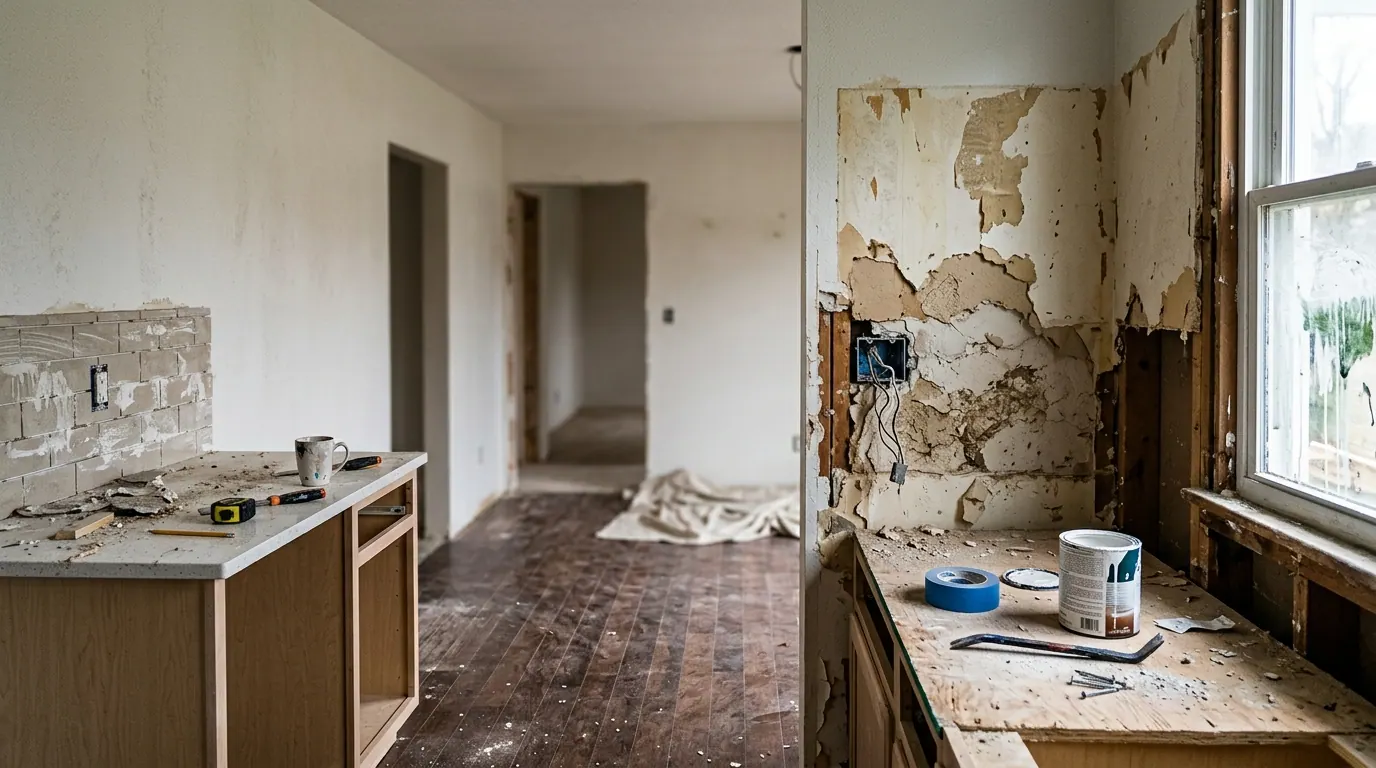
Generated (Gemini), via Wikimedia Commons
If we did our last flip again, we'd budget more contingency, skip the personal-taste finishes, vet subs harder, plan for permit delays, and open up the walls before pricing the job instead of after. None of these are exotic lessons. They're the same five things most small investors learn the hard way, usually once, on the flip that teaches them to stop trusting the first number.
Underestimating what "cosmetic only" actually means
Going in, the plan was paint, flooring, kitchen and bath refresh, maybe some updated lighting. That's the kind of scope that looks clean on a spreadsheet. The problem is you can't fully price cosmetic work until you've opened up enough to see what's behind it. Once we pulled old cabinets and flooring, we found outdated wiring that didn't meet current code for a kitchen remodel, and plumbing that needed rerouting because the layout was changing more than we'd planned.
This is common enough that it should be assumed, not hoped against. Older homes especially tend to have knob-and-tube remnants, undersized panels, or galvanized supply lines that were fine for the old layout and not fine once you move a sink or add can lights. A licensed electrician or plumber walking the space before you finalize a budget costs a few hundred dollars. Skipping that walkthrough is how a $15,000 kitchen becomes a $24,000 kitchen halfway through demo.
Not building in enough contingency
We budgeted 10% contingency, which is the number that gets thrown around a lot. On a rehab that involves any structural, electrical, or plumbing surprises, 10% is thin. A more honest range for a moderate flip is 15-20%, and for anything with an older structure or unknown mechanicals, 20-25% isn't overcautious, it's realistic.
The math matters because contingency isn't a rounding error, it's the thing that keeps a flip profitable when (not if) something unexpected shows up. Running a project at 10% contingency means one bad surprise, a rotted sill plate, a failed sewer line inspection, wipes out your buffer and starts eating into margin on the very first surprise. Two surprises and you're financing the rest out of pocket or slowing down to find more money, which costs you in holding time too.
Choosing finishes we liked instead of finishes the market wanted
This is a mistake that doesn't show up as a line item, it shows up in days on market. We picked some finishes because we liked them personally, a bold tile choice, a specific paint color, hardware that felt distinctive. On a flip, distinctive isn't the goal. Neutral, durable, and consistent with what buyers in that price range expect is the goal. A house that photographs well and reads as "move-in ready" to the broadest number of buyers sells faster and closer to asking than a house that photographs well to a narrower slice of buyers who share your taste.
The fix isn't complicated. Look at what's selling in the immediate comp set, not what's trending. Keep big-ticket visual choices, cabinets, flooring, counters, in the safe-neutral range, and save any personality for cheap, reversible things like paint accents or light fixtures that a stager or future owner can swap easily.
Underestimating holding costs from permit and inspection delays
We priced the renovation timeline optimistically and didn't build in slack for permit turnaround or inspection scheduling. Permitting timelines vary a lot by jurisdiction, anywhere from a couple of weeks to a couple of months depending on the scope and how backed up the local building department is. Inspections then have to be scheduled around that, and failed inspections mean a second visit, which means more waiting.
Every extra week on the project is a week of loan interest, insurance, utilities, and property tax accruing with no revenue coming in. On a project financed with a hard money or bridge loan, that can run several hundred dollars a week in interest alone, sometimes more depending on the loan size and rate. A three-week permit delay you didn't plan for can quietly cost as much as a mid-size finish upgrade would have.
Not getting competitive bids on every trade
We leaned on one general contractor's relationships instead of getting separate bids for electrical, plumbing, and framing. That GC relationship was solid and the work was fine, but we never really knew if we were paying a fair market rate or a convenience premium. On a flip, a 10-15% difference in trade pricing across several subcontractors adds up to real money by the time the project closes out.
Next time the plan is simple: get at least two bids on any trade over a few thousand dollars, even if there's a preferred contractor already lined up. It costs nothing but a little coordination time, and it either confirms the price is fair or saves real money.
What it costs to ignore all five
Individually, each of these mistakes is manageable. Together, they compound. A thin contingency plus a permit delay plus a finish choice that slows the sale can turn a flip that should have cleared a healthy margin into one that barely breaks even after financing costs. None of these are dramatic failures, which is exactly why they're easy to miss until the closing statement is in front of you and the math doesn't look the way it did on the spreadsheet six months earlier.
FAQ
How much contingency should a first-time flipper budget?
As a general range, 15-20% of the renovation budget for a moderate rehab, and 20-25% for anything with unknown structural, electrical, or plumbing conditions. Newer homes with known mechanicals can sometimes get away with less, but it's safer to budget high and come in under than the other way around.
Is it worth hiring a general contractor instead of managing subs directly?
It depends on your available time and experience. A GC adds cost, usually a markup in the range of 10-20% over direct trade pricing, but they also absorb the scheduling and coordination work and often have existing trade relationships that keep quality consistent. For a first flip, that markup is often worth it. For someone who's done several projects and has trade contacts already, self-managing can save real money if there's time to actually run the job.
Get the real numbers
Every renovation post includes the actual costs. Join the list and get each new breakdown as it goes up.
Join the list