Flooring Costs Compared: LVP, Hardwood, and Tile in a Real Flip
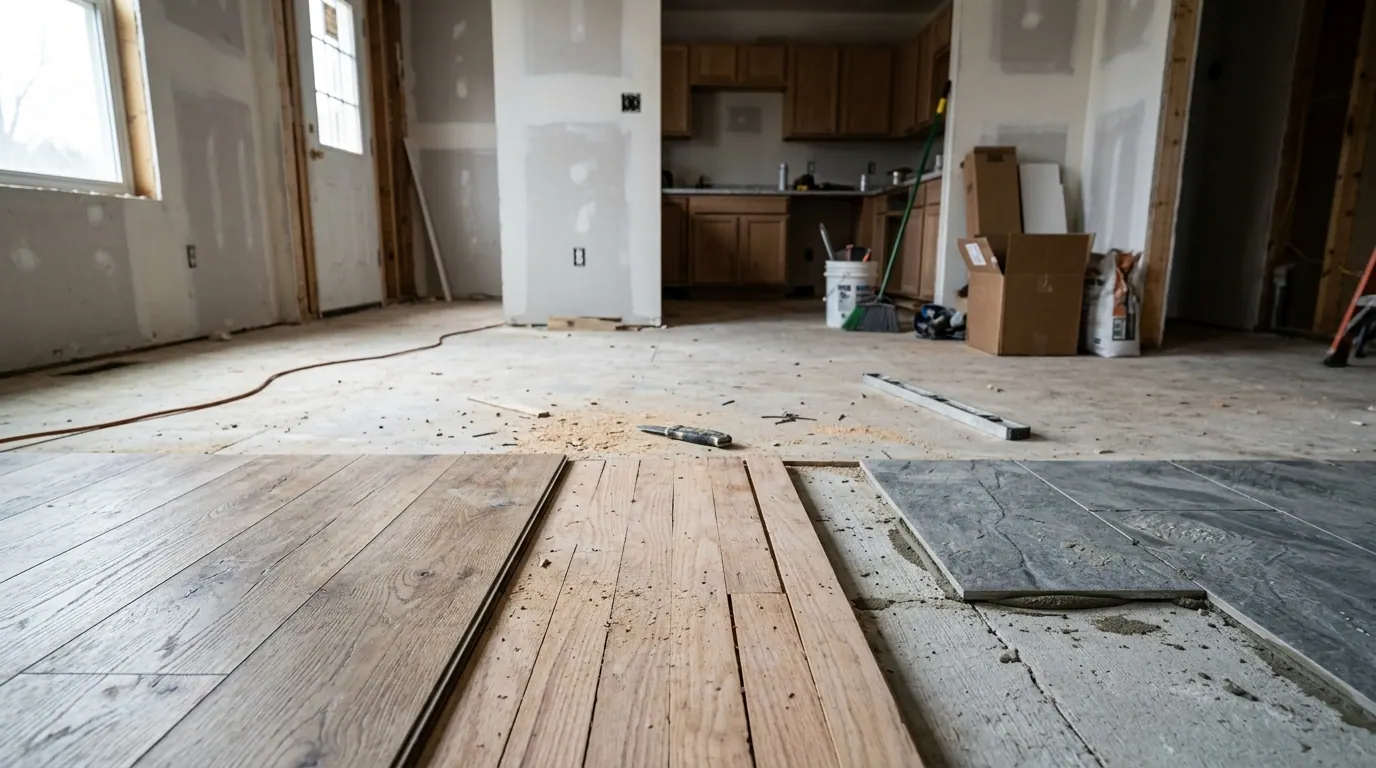
Generated (Gemini), via Wikimedia Commons
For a typical flip or renovation, LVP runs $4 to $9 per square foot installed, hardwood runs $8 to $16, and tile runs $7 to $18 depending on the tile and the layout. Those ranges include material and labor. If you want one number to plan a budget around: LVP is the cheapest and most forgiving, hardwood adds resale value in the right kind of house, and tile is worth it mainly in wet areas and mainly as a small footprint, not a whole floor.
What LVP actually costs
Luxury vinyl plank is the material most flippers default to now, and for good reason. Product cost alone ranges from $1.50 to $5 per square foot depending on wear layer thickness and whether it is a rigid core or a flexible click-lock product. Installation labor adds another $1.50 to $3 per square foot for a straightforward room with a flat subfloor.
The variable that surprises people is subfloor prep. LVP hides a lot, but it does not hide a subfloor that flexes or has dips over a quarter inch. Self-leveling compound to fix a bad subfloor can add $2 to $5 per square foot on top of the flooring cost itself. If a house has squeaky, uneven original subfloor, budget for that separately before you price the LVP.
LVP is also the flooring where DIY installation is realistic for someone with basic tools. That can cut labor cost close to zero, but it takes real time, and rushed LVP install shows up as gaps and lippage at seams within a year.
What hardwood actually costs
Solid hardwood, installed, typically runs $8 to $14 per square foot for common species like red oak. Engineered hardwood is usually a bit cheaper to install, in the $7 to $12 range, because it is more forgiving of minor subfloor imperfections and sometimes floats instead of nailing down.
Refinishing existing hardwood instead of replacing it is the move that changes the math the most. Sanding and refinishing runs $3 to $6 per square foot in most markets, versus $8 plus for new material. If a house has original hardwood under carpet, pulling the carpet and checking the floor before pricing anything else is close to free money if the wood is in decent shape.
Hardwood also has real costs that show up later: it needs a stable humidity environment, and in a flip that is sitting vacant through a season change, gaps and cupping can appear if the HVAC is not running consistently. That is not a defect in the product, it is a defect in how the house was managed during the sale process.
What tile actually costs
Tile has the widest range of any flooring type because the material cost swings so much. Basic ceramic tile can be $1 to $3 per square foot for material, while porcelain and natural stone run $5 to $15 or more. Labor is where tile gets expensive: $5 to $10 per square foot is normal, and that climbs with a diagonal layout, a large-format tile that needs a flatter substrate, or a pattern that requires a lot of cuts.
Waterproofing and substrate work for tile in a bathroom or a shower is not optional and it is not cheap. A proper waterproof membrane and backer board setup for a bathroom floor and shower surround can add $500 to $2,000 to a single bathroom job before a single tile goes down. Skipping this to save money is the single most common source of expensive callbacks in tile work.
Grout choice matters for maintenance cost down the road. Standard sanded grout needs sealing and will discolor over years. Epoxy grout costs more upfront but resists staining, which matters more in a rental than in a flip you are about to sell.
Labor and subfloor prep, the hidden cost driver
Across all three materials, the number that actually determines your final bill is subfloor condition, not the flooring product. A flat, dry, structurally sound subfloor makes any of these three options land at the low end of its range. A subfloor with squeaks, soft spots, moisture history, or more than a quarter inch of variation over 10 feet pushes every option toward the high end, sometimes by $2 to $6 per square foot regardless of what finish flooring you pick.
Before getting quotes on flooring, it is worth walking the house and checking for:
- Soft or bouncy spots when walking, which can mean rotted subfloor from a past leak
- Visible slope with a level or a marble, which affects both cost and which materials are even appropriate
- Moisture readings in basements or slab-on-grade areas, since this rules out solid hardwood in some cases
- Old adhesive or multiple layers of flooring stacked on top of each other, which adds demo cost before install even starts
Any contractor quoting flooring without looking at the subfloor first is giving you a number that will change once the floor is opened up.
What actually pays off in a flip
For a flip, LVP in bedrooms, hallways, and living areas is usually the right call. It is durable, it photographs well, buyers do not penalize it the way they might have five years ago, and the cost per square foot lets you cover more of the house within a reasonable budget.
Hardwood pays off specifically in the entry, dining room, and main living areas of houses in neighborhoods where comparable sales have hardwood. In a price range where buyers expect it, hardwood in those visible rooms can support a higher list price. In a starter-home price range, the extra cost over LVP often does not come back at sale.
Tile earns its cost in bathrooms, entryways, and mudrooms, where water and dirt exposure make it the practical choice regardless of resale math. Tiling a whole main floor for resale appeal is rarely worth it compared to LVP at a fraction of the cost, unless the local market specifically expects it.
A rough rule that holds up across a lot of flips: match the flooring cost to the exit price point. A house that will sell for $220,000 does not need $14 per square foot hardwood in every room. A house that will sell for $650,000 with hardwood-flooring comps nearby probably does.
When the upgrade is not worth it
If the existing floor is solid hardwood under carpet or vinyl and it is in fair to good condition, refinishing beats replacing almost every time on cost and often on speed, since sanding and finishing can be faster than ripping out and installing new material.
If a basement or below-grade room has a history of moisture, spending on hardwood there is not worth it no matter how nice it looks in the showroom. LVP or tile handle occasional moisture far better, and hardwood in a damp space is a callback waiting to happen.
If a house is a rental rather than a flip, durability usually matters more than appearance. LVP with a thick wear layer, or tile in high-traffic areas, will cost less over five years of tenant turnover than hardwood that needs refinishing after normal wear.
We cover renovation costs like this at Fixer Files because the number that matters is not the price per square foot on the showroom sample, it is the price per square foot once the subfloor, the labor, and the resale math are all counted. Get quotes for all three, get the subfloor checked before any of them, and pick based on the room and the price point, not on what looks best in a photo.
Get the real numbers
Every renovation post includes the actual costs. Join the list and get each new breakdown as it goes up.
Join the list