How Long Does a Flip Actually Take, Start to Finish?
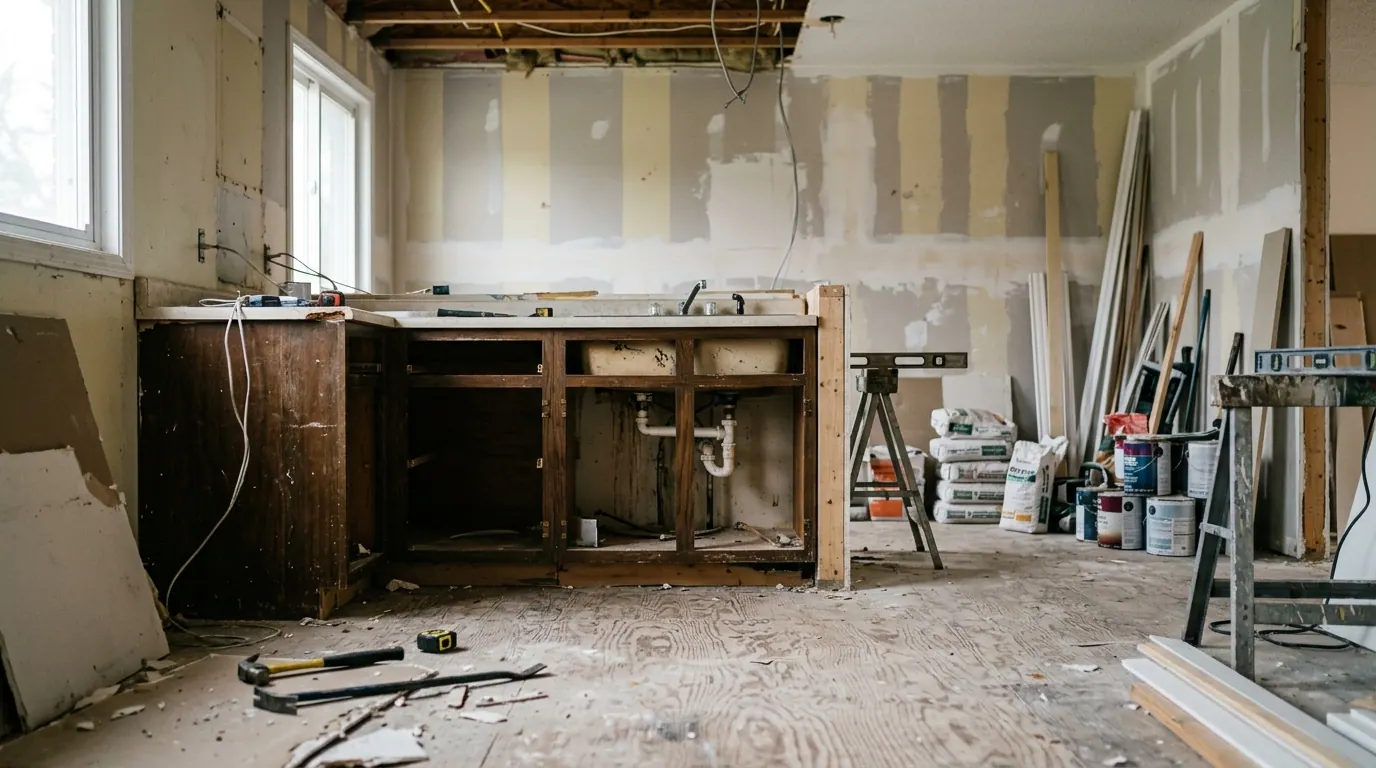
Generated (Gemini), via Wikimedia Commons
A straightforward flip, the kind with no major structural surprises, runs 4 to 6 months from closing on the purchase to closing on the sale. A flip with a permit-required addition, a kitchen moved to a new wall, or a foundation issue found mid-demo can run 8 to 12 months. The TV shows compress this into 30 to 45 days of screen time because that's a watchable episode, not because that's how long the work takes.
This matters because the timeline is the budget. Every extra month is another mortgage or hard money payment, another utility bill, another month of insurance on a vacant property. People who plan for 90 days and land at 180 days usually aren't bad at renovation. They're bad at scheduling, and nobody warned them.
What the problem actually looks like
You budgeted for a 3-month flip. You're at month 5 and still waiting on a final inspection. The holding costs that were supposed to be a rounding error are now $4,000 to $8,000 over what you planned, depending on your loan rate and the local tax and insurance numbers. The contractor you hired for 6 weeks of work is now juggling two other jobs because your project ran long and he moved on to paying clients. You're making decisions under pressure you didn't plan for, which is when corners get cut.
The other version of this problem looks like a stalled permit. The plans are submitted, the city says 4 to 6 weeks for review, and it's week 9 with no word. Nothing on site can legally proceed past rough-in until that permit clears, so your crew sits idle or leaves for another job.
Why it happens
Permitting is the single biggest variable and the one people underestimate most. A simple cosmetic flip (paint, flooring, countertops, no moved plumbing or electrical) often doesn't need a permit at all. The moment you move a wall, add a bathroom, touch the electrical panel, or add square footage, you're in permit territory, and permit timelines are set by the municipality, not by you or your contractor. In a busy jurisdiction, plan review alone can take 4 to 10 weeks before a single inspector shows up.
Trade scheduling is the second big factor. Good electricians, plumbers, and HVAC techs are booked out, often 2 to 6 weeks ahead. If your framing runs a week over, you don't just lose a week. You lose your spot in the next three trades' calendars and have to wait for a new opening. This is why a project that looks like it's 80% done can sit for 3 weeks waiting for one subcontractor to become available.
Then there's what's behind the walls. Old knob-and-tube wiring, galvanized plumbing that crumbles when you touch it, water damage under a tub surround, a foundation crack that wasn't visible until the old finish came off. None of this shows up on a walkthrough. All of it adds time once demo starts, because you can't quote or schedule a repair you don't know exists until the wall is open.
What we do about it
A realistic schedule breaks into phases, and each one has its own lead time most people don't account for.
- Due diligence and closing: 2 to 6 weeks, longer if it's a foreclosure or estate sale with title issues.
- Design and permitting: 2 to 12 weeks. Cosmetic work needs almost none of this. Structural or layout changes need all of it, and the permit clock often runs longer than the actual construction.
- Demo: 1 to 2 weeks for a single-family house, done early so you can actually see what you're dealing with before finalizing scope.
- Rough-in (framing, electrical, plumbing, HVAC): 2 to 6 weeks, and this is where most schedule slippage happens because it depends on trade availability and inspection sign-off between steps.
- Inspections between rough-in and drywall: budget a few days to 2 weeks of waiting, since many jurisdictions won't let drywall go up until rough-in passes.
- Drywall, paint, flooring, cabinets, trim: 3 to 6 weeks, fairly predictable once materials are on site, though cabinet lead times of 4 to 8 weeks should be ordered as early as the design is locked.
- Final inspections and punch list: 1 to 3 weeks, often longer than expected because the final walkthrough tends to surface a list of small fixes.
- Staging, photos, listing, and time on market: 2 to 8 weeks depending on the local market, and this is pure calendar time with no construction happening.
Add it up honestly and a no-permit cosmetic flip can genuinely land in the 10 to 14 week range. A flip with a permitted addition or layout change is realistically 6 to 9 months, and that's without a bad surprise. Experienced flippers build in a contingency of 3 to 4 weeks on top of whatever schedule the contractor hands them, because contractors tend to quote the schedule if everything goes right.
What it costs to ignore
Every month of overrun costs real money, not just inconvenience. On a typical hard money loan, that's often 1% to 1.5% of the loan balance per month in interest, plus points if you need to extend the term. Add property taxes, insurance on a vacant renovation (which runs higher than standard homeowner's insurance), and utilities kept on for the crew, and a lot of flippers find an extra 2 months quietly costs $3,000 to $7,000 on a mid-size project, sometimes more in high-tax areas.
The bigger cost is decision quality. A flipper who is 2 months behind schedule and burning cash starts cutting corners to get to the finish line: skipping a trade's callback for a minor fix, using the cheaper fixture because the good one has a 6-week lead time, rushing the punch list. Those shortcuts show up in the home inspection on the buyer's side, which can cost more in repair credits than the time saved was worth.
FAQ
Can I speed up permitting?
Sometimes. Some jurisdictions offer expedited review for an extra fee, and a good local architect or permit expediter who knows the office can shave real time off the process. But you can't force a government office to move faster than it moves, and building that assumption into your schedule is where a lot of flips get into trouble.
Is a faster flip always a better flip?
Not automatically. Speed that comes from skipping permits, rushing inspections, or using unavailable-for-callback labor usually shows up later as rework or buyer-side repair demands. The goal isn't the fastest timeline, it's the shortest timeline that still lets every trade do its job once. If you're tracking real numbers on a project like this, Fixer Files is where we try to show the actual math instead of the highlight reel.
Get the real numbers
Every renovation post includes the actual costs. Join the list and get each new breakdown as it goes up.
Join the list