How Much Contingency Should You Budget for a Renovation?
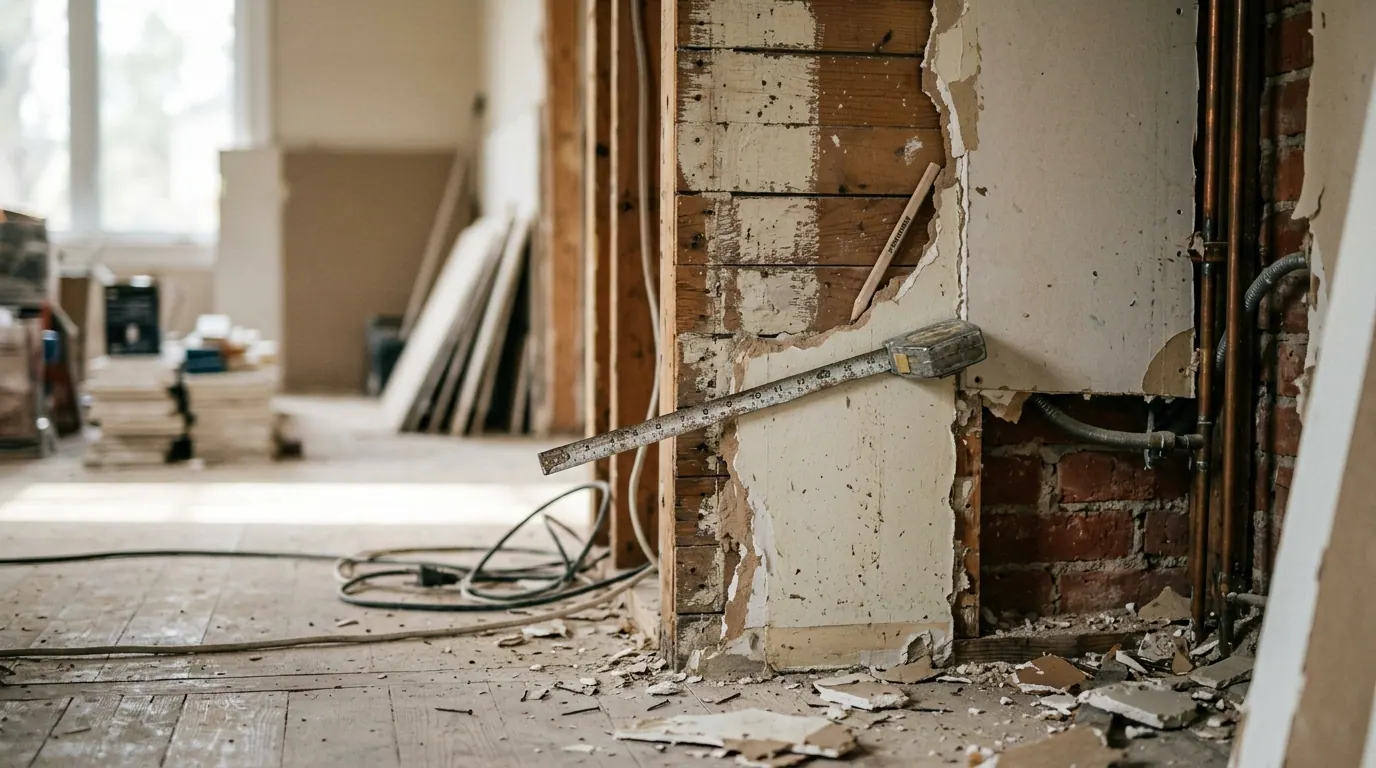
Generated (Gemini), via Wikimedia Commons
Budget 10-15% contingency for a cosmetic update in a house you know well. Budget 20-25% for a kitchen, bathroom, or addition where walls are opening up. Budget 25-35% for anything in a house built before 1980, a gut renovation, or a flip where you haven't lived with the house long enough to know its quirks. Those are ranges, not guesses pulled from nowhere, and this post explains how to land on the right number for your job instead of just picking one.
What you need
- A real scope of work, written down, not just a mental list
- At least one detailed contractor bid, itemized by trade, not a lump sum number
- The age of the house and any known history (past permits, past water damage, past additions)
- A rough idea of what's behind the walls, floors, or ceilings you're planning to open
- A separate bank account or line item for the contingency fund, so it doesn't quietly get spent on upgrades
The scope and the bid matter more than any percentage. Contingency is a cushion against the unknown parts of a known job. If your scope is vague, your contingency number is just a guess on top of a guess.
Step by step
- Get a firm base bid first. Contingency is a percentage of the actual project cost, not a wish. Before you can set aside 15% or 25%, you need a number to take 15% or 25% of. A verbal estimate or a rough square-footage guess isn't good enough here. Get an itemized bid, or build your own itemized budget from material quotes and labor estimates if you're managing it yourself.
- Rate the risk of the job, not the size. A big cosmetic job, like refinishing floors and repainting an entire main level, can carry a small contingency because there's little hidden risk. A small job, like opening one wall to move a sink drain, can carry a huge contingency if that wall turns out to have old cast iron pipe or undersized framing. Rate risk by these factors: age of the house, whether you're opening walls or floors, whether plumbing or electrical is being moved, and whether the house has been renovated before by someone whose work you can't verify.
- Pick a percentage that matches the risk tier.
- Low risk (paint, flooring, fixtures, no structural or systems work): 10%
- Medium risk (kitchen or bath remodel, some plumbing or electrical relocation, house built after 1980): 15-20%
- High risk (structural changes, additions, houses built before 1980, or any house where you can't see the framing or foundation clearly): 25%
- Full gut renovation or a flip bought sight-unseen on condition: 30-35%
- Set the money aside and treat it as untouchable until something goes wrong. This is the step most people skip. They mentally budget the contingency but then spend it on a nicer faucet or upgraded cabinets partway through, and when the actual surprise hits (and one almost always does) there's nothing left. Put the contingency in a separate account or at least a separate line in your spreadsheet that you don't touch for anything except genuine unknowns: rot, code violations, structural surprises, permit-driven scope changes.
Where this goes wrong
The most common mistake is calculating contingency as a percentage of the number you wanted to spend, not the number the job actually costs. If you have a $60,000 budget in your head and a contractor bids $75,000, adding 15% contingency to your $60,000 wish number instead of the real $75,000 bid leaves you short before you've even started.
The second common mistake is using one flat percentage for every renovation regardless of risk. A 10% contingency on a full gut of a 1920s house is not a real cushion. Old houses hide balloon framing, undersized electrical panels, galvanized pipe that crumbles when touched, asbestos in old flooring or duct wrap, and foundations that were never properly waterproofed. Any one of these can add five figures to a project. A 10% buffer on a $150,000 gut job is $15,000, and a bad foundation issue alone can eat that.
The third mistake is spending the contingency on upgrades instead of saving it for problems. It's tempting halfway through a kitchen job to use "extra" contingency money on upgraded countertops or a bigger island, especially if the first few weeks go smoothly. Renovations rarely stay smooth. Problems tend to surface later, often once demo is further along or once an inspector flags something. Spending contingency early on wants instead of needs is one of the fastest ways a project runs out of money before it's finished.
The fourth mistake, more specific to flips and investment properties, is not budgeting contingency into the purchase math at all. If a flip's numbers only work with zero surprises, the numbers don't actually work. Lenders and experienced investors build contingency into their deal analysis before they even close, because financing a surprise mid-project is far more expensive than planning for it up front.
When to stop and call someone
If a bid comes back and your gut says it's too low compared to other quotes, don't just add a contingency on top and move forward. A bid that's 20-30% below every other bid you got is usually missing scope, not offering a deal. Get clarity on exactly what's included before treating that number as your baseline.
If you open a wall, ceiling, or floor and find something you don't recognize (staining that suggests old water intrusion, wiring that isn't modern romex, ductwork wrapped in something fibrous and grey) stop and get a professional opinion before continuing demo. This isn't about being cautious for its own sake. Disturbing asbestos-containing materials or ignoring active water damage can turn a contingency problem into a health and liability problem.
If your contingency fund gets used up before the project is 75% complete, stop and reassess before continuing. This is the point where people either take on high-interest debt to keep going or start cutting corners on things like permits and inspections to save money. Neither is a good trade. It's better to pause, get updated bids on what's left, and figure out a real number than to keep spending on hope.
If you're working with a fixed-price contract and the contractor keeps coming back with "unforeseen" charges that don't match anything you or an inspector can see once walls are open, get a second contractor or an independent inspector to look at the work before paying for more change orders. Most contingency spending is legitimate, but not all of it, and a second set of eyes costs far less than a pattern of padded change orders.
Contingency isn't about predicting exactly what will go wrong. It's about admitting that something usually does, and having the money ready when it happens instead of scrambling for it. If you want more real numbers from actual renovations and flips instead of TV-show budgets, that's the whole point of Fixer Files.
Get the real numbers
Every renovation post includes the actual costs. Join the list and get each new breakdown as it goes up.
Join the list