HVAC Replacement: What We Paid and Why It Was More Than Quoted
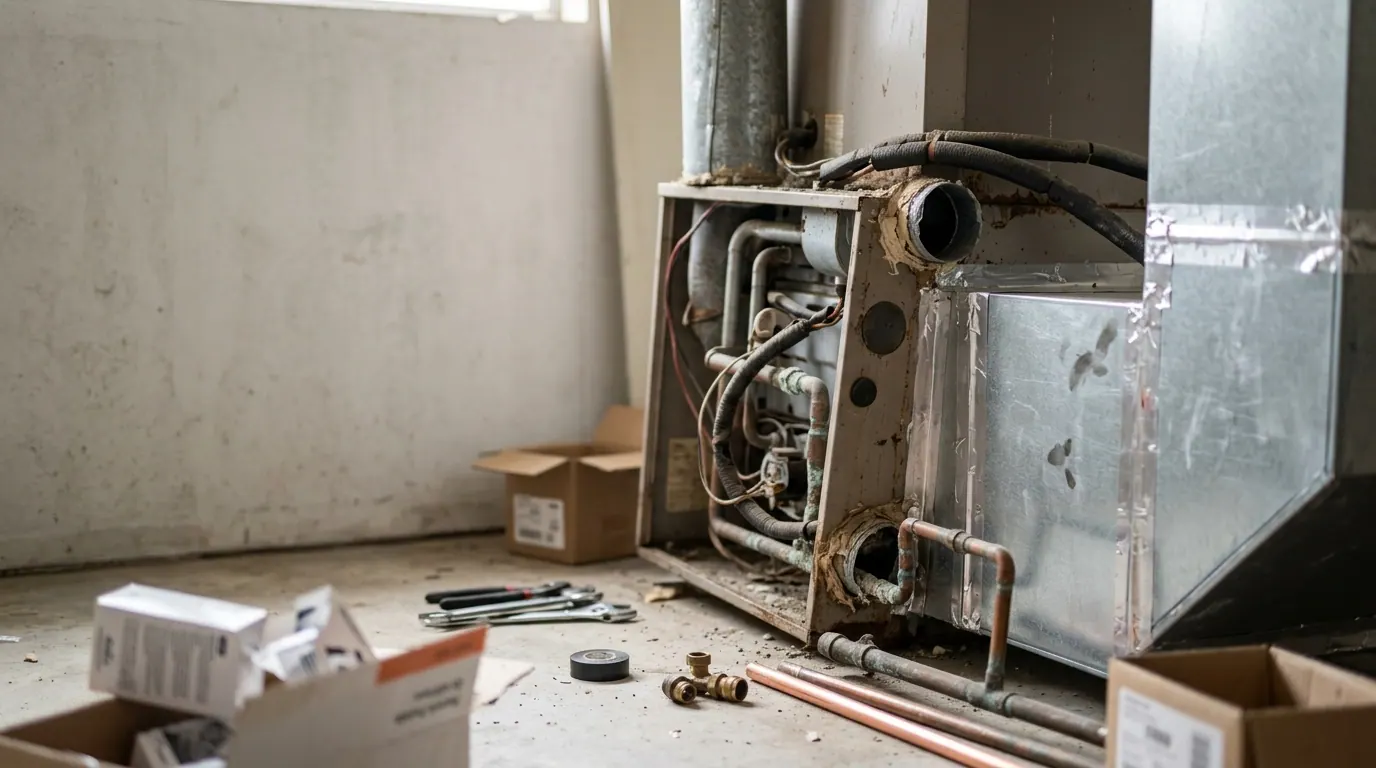
Generated (Gemini), via Wikimedia Commons
If your HVAC quote said one number and the final invoice said something 15% to 40% higher, you are not being scammed. You are running into the normal gap between what a contractor can see during a walkthrough and what they find once the old system is actually out of the wall. HVAC replacement is one of the most commonly underquoted jobs in residential work, and it is not usually because of dishonest pricing. It is because the quote was written before anyone knew what was really behind the furnace.
Most likely cause
The single biggest reason final HVAC costs exceed quotes is that the original number was based on equipment price, not system price. A quote for "a 3-ton unit installed" often assumes your ductwork, electrical, and venting are already up to code and sized correctly for the new equipment. In older houses, they usually are not.
To confirm this is what happened to you, pull out the original quote and look for these words: load calculation, duct inspection, or electrical assessment. If none of them appear, the contractor priced the box, not the job. A proper quote for a full system replacement should reference a Manual J load calculation (the industry standard for sizing equipment to your house) and should say whether ductwork was inspected or just assumed adequate.
Common gaps that show up mid-install and add cost:
- Existing ductwork is undersized or leaky and cannot handle the new unit's airflow, adding $1,500 to $4,000 in duct modification
- The electrical panel or disconnect does not meet current code for the new unit's amperage, adding $300 to $1,200
- The line set (refrigerant lines) is the wrong diameter for the new equipment and needs replacing rather than reusing, adding $500 to $1,500
Less common causes
Beyond the equipment-to-house mismatch, a few other things push costs up that homeowners rarely anticipate.
Permit and code compliance surprises. Many contractors quote the job as if a permit will be a flat add-on fee, but if the inspector requires updates to combustion air venting, condensate drainage, or seismic strapping (depending on your region), those are change orders discovered only after the permit is pulled. Confirm by asking upfront whether the quote includes permit fees and whether it assumes the current install passes inspection as-is or will need upgrades to pass.
Asbestos or old insulation in ductwork. Houses built before the early 1980s sometimes have asbestos-wrapped ducts or pipe insulation near the furnace. If this shows up once demo starts, work stops until it is tested and, if positive, remediated by a licensed abatement contractor. This alone can add $1,000 to $5,000 and several days of delay. Confirm risk by checking your home's construction date and asking the contractor to inspect visible duct insulation before signing anything.
Structural or access problems. If the furnace or air handler is in an attic, crawlspace, or tight closet, and the new unit is a different size or shape than the old one, contractors sometimes discover during removal that the opening needs to be enlarged or that flooring needs reinforcement to support the new equipment. This is harder to predict in advance, which is exactly why it is not usually in the original number.
How to fix it
You cannot always prevent every overage, but you can shrink the gap between quote and final bill significantly by doing these things in order, before you sign a contract:
- Ask for a written load calculation (Manual J), not just a verbal estimate of tonnage based on square footage. This is standard practice and any licensed HVAC contractor should be able to provide it, sometimes for a small fee, sometimes included.
- Ask the contractor to physically inspect the ductwork, not just the furnace or condenser, before quoting. A five-minute look at duct size and condition catches most of the surprises above.
- Get the permit fee itemized separately in the quote, along with a written statement of what happens to price if the inspector requires additional work.
- Ask directly: "Is this quote based on reusing my existing ductwork, line set, and electrical, or does it assume replacement?" Get the answer in writing.
- Build a contingency of 15% to 25% into your renovation budget for HVAC specifically. This is not padding, it is the realistic range that most experienced flippers and contractors budget for this trade because of how often hidden conditions appear.
- Get at least two quotes and compare not just the bottom line but what each one assumes is already adequate. The cheaper quote is often cheaper because it assumes more and inspects less.
If you are already mid-project and facing a change order, ask for the reason in plain terms and ask to see the code section or manufacturer spec that requires it. Reputable contractors can point to something specific. If the answer is vague, get a second opinion before approving the extra cost.
When it is not worth fixing
Sometimes the honest answer is that patching the existing system is not worth it, and the "overage" you are seeing quoted is actually the cost of doing the job right instead of doing it cheap.
If your ductwork is more than 20 years old, undersized, or leaking at the joints, replacing only the furnace or condenser while reusing bad ducts is a false economy. You will get a new unit working harder than it should, higher utility bills, and uneven temperatures room to room. In that case, the extra $2,000 to $4,000 for duct work is not scope creep, it is the difference between a system that works and one that technically runs.
On the other side, if you are flipping a property and the existing system is functional, code-compliant, and under 10 to 12 years old, a full replacement may not be worth doing at all. A serviced, working system with a documented recent tune-up can be a selling point on its own, and the money is often better spent elsewhere in the renovation. Full replacement makes the most sense when the unit is at or past its typical 15 to 20 year service life, when repairs are piling up, or when a buyer's inspector is likely to flag the system's age as a negotiating point.
The real lesson from most HVAC replacement jobs that come in over quote is not that contractors lowball on purpose. It is that a walkthrough quote and a scoped quote are two different documents, and homeowners often only get the first one. Ask for the second one, in writing, before you commit. That single step closes most of the gap between what you were told and what you end up paying.
We track jobs like this at Fixer Files because the pattern repeats across almost every trade, not just HVAC: the quote reflects what was visible, the invoice reflects what was found.
Get the real numbers
Every renovation post includes the actual costs. Join the list and get each new breakdown as it goes up.
Join the list