Should You Buy a House With a Bad Foundation? What to Know First
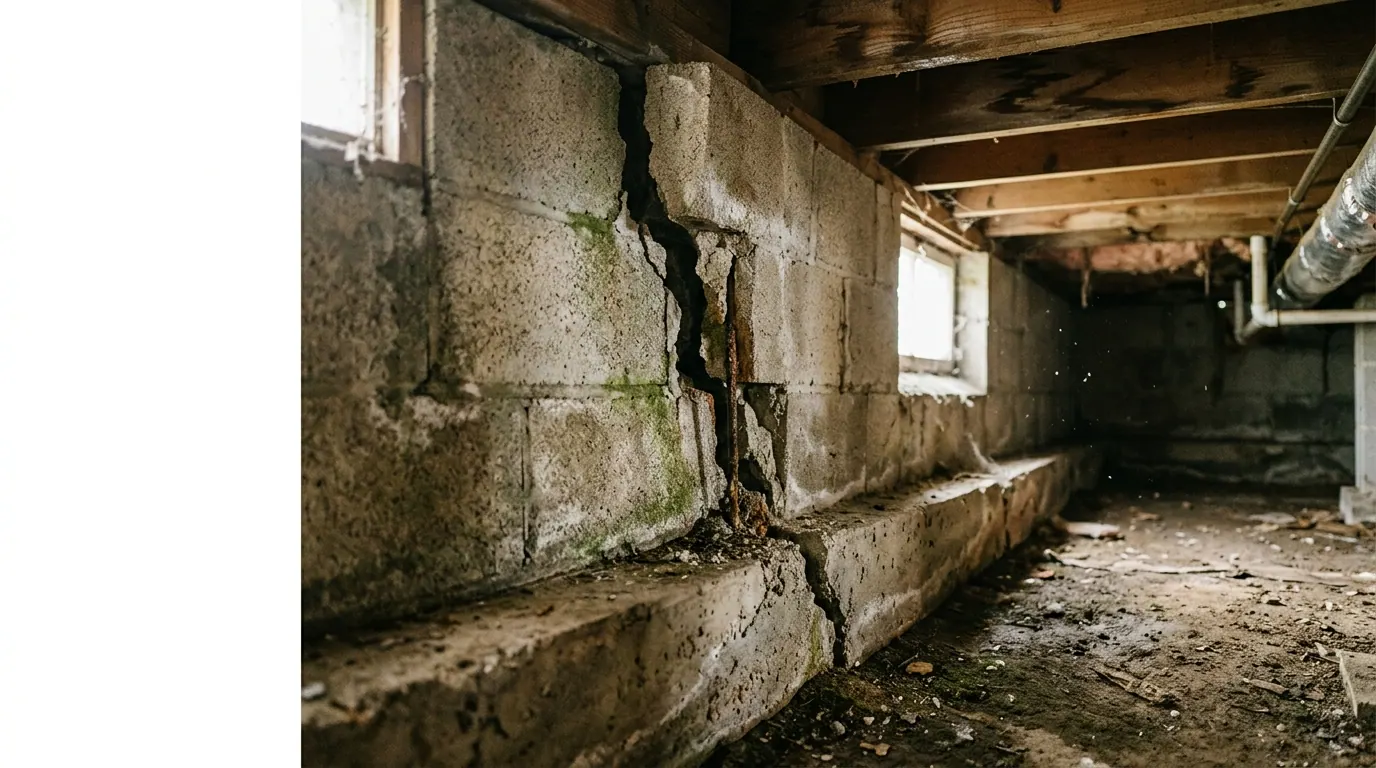
Generated (Gemini), via Wikimedia Commons
Yes, you can buy a house with a bad foundation, and sometimes it's a smart move. The price drop often covers the repair with room to spare. But you need real numbers before you write an offer, not a gut feeling and not the seller's reassurance that "it's just cosmetic." Foundation issues range from a $500 crack injection to a $60,000 full underpinning job, and the house can look the same from the curb either way.
If you're walking through a listing and noticing diagonal cracks over doorways, a floor that visibly slopes when you set a marble down, or doors that stick in their frames in ways that don't match the weather, your instinct to slow down is correct. These are the classic signs that bring buyers to this question in the first place.
Most likely cause
In most older homes, foundation movement comes down to soil. Clay soil expands when it's wet and shrinks when it's dry, and that constant motion puts pressure on the footings underneath the house. Over decades, this shows up as stair-step cracks in block or brick foundations, hairline cracks in poured concrete, or a slow settling at one corner of the house. It's the most common cause by a wide margin, especially in regions with expansive clay or in houses built before modern footing standards were common.
To confirm it, look for a pattern rather than a single crack. One hairline crack in a basement wall is normal aging concrete and rarely worth worrying about. A pattern of cracks that widen toward the top, combined with sloping floors and sticking doors on the same side of the house, points to real settlement. A foundation inspector can confirm with a level reading across the slab or crawlspace, and this is worth the $400 to $800 it typically costs before you commit to an offer.
Less common causes
Water is the next biggest culprit, and it's often mistaken for structural settlement. Poor grading, clogged gutters, or a missing downspout extension can pool water against the foundation and cause bowing walls or seasonal cracking that looks dramatic but is really a drainage problem. You confirm this by checking whether the ground around the foundation slopes toward the house instead of away from it, and whether cracks seem to open and close with the seasons rather than steadily widening.
Tree roots are another cause, particularly with large trees planted close to the house. Roots can pull moisture unevenly from the soil under one section of foundation, causing localized settling. You can often confirm this by noting whether the affected side of the house has a large, mature tree within 15 to 20 feet, and whether a root has visibly lifted a nearby sidewalk or driveway slab.
Less often, the problem is simply bad original construction: undersized footings, footings poured on fill dirt instead of undisturbed soil, or a slab poured without proper reinforcement. This is harder to confirm visually, but a structural engineer can usually tell from the foundation's age, the builder's reputation if known, and core samples or soil tests in more serious cases.
How to fix it
If you decide to move forward with the purchase, here's the realistic order of operations once you own the house or have it under contract with inspection contingencies intact.
- Get a structural engineer's report, not just a foundation company's estimate. A structural engineer has no incentive to sell you a repair, so their assessment is more trustworthy for scope and severity. Expect to pay $500 to $1,500 for a full report.
- Get two or three repair quotes from foundation specialists. Minor crack injection and sealing runs roughly $500 to $2,500 per crack. Pier and beam leveling with helical or push piers commonly runs $1,000 to $3,000 per pier, and a typical job needs 8 to 15 piers, putting many full underpinning jobs in the $15,000 to $45,000 range. Severe cases with wall replacement or extensive slab work can run higher.
- Fix water and grading issues first if they're a contributing factor. Regrading soil away from the foundation, extending downspouts, and installing a French drain are comparatively cheap, often $1,000 to $5,000 total, and can stop further movement before you spend money on structural repair.
- Address root causes before cosmetic repair. There's no point patching drywall cracks or repainting a basement wall until the underlying movement is stabilized. Cosmetic work done too early is wasted money.
- Get a transferable warranty on any structural repair. Reputable foundation companies offer 10 to lifetime warranties that transfer to future buyers. This matters enormously for resale, since many buyers and their lenders will ask for proof of warrantied repair work.
When it is not worth fixing
Here's where buyers get into trouble: treating a foundation problem like a renovation project when it's really a financial decision. Before you commit, run the numbers honestly.
Start with the repair estimate on the high end of the range you were quoted, not the low end. Foundation jobs routinely run over budget once the crew opens things up and finds worse soil conditions or additional cracking than the original inspection caught. Add 15 to 20 percent as a buffer.
Then compare that total cost, plus the purchase price, against what comparable fixed-up homes are selling for in the area. If a foundation repair of $30,000 brings your all-in cost close to or above the neighborhood ceiling for similar homes, the deal doesn't work, no matter how good the bones are otherwise. This is the single most common mistake first-time flippers make with foundation problems: they fall in love with the discount on the purchase price and don't model the full repair cost against the after-repair value.
It's also worth walking away, or renegotiating hard, if the engineer's report flags multiple separate problems rather than one isolated cause. A house with settlement issues on one corner, bowing basement walls on another side, and evidence of a previous unpermitted repair is telling you something about the site, not just the structure. Multiple unrelated foundation problems usually mean ongoing soil or drainage conditions that will keep causing issues after you fix the current ones.
Lending can also kill a deal that otherwise pencils out. Many conventional lenders and most FHA loans require foundation issues to be resolved before closing, or they require the repair cost to be held in escrow. If you're financing the purchase and the repair, get your lender's foundation policy in writing early, not after you're under contract and the clock is running.
The honest bottom line: a bad foundation is not automatically a dealbreaker, but it changes the math on every other decision you make about the house. Know the real repair cost, know the after-repair value, and only then decide if the discount is big enough to make it worth your while. We dig into these buy-versus-walk calculations regularly at Fixer Files, because the number on the inspection report rarely matches what the repair actually costs once work begins.
Get the real numbers
Every renovation post includes the actual costs. Join the list and get each new breakdown as it goes up.
Join the list