We Found Knob-and-Tube Wiring Mid-Renovation: What Happened Next
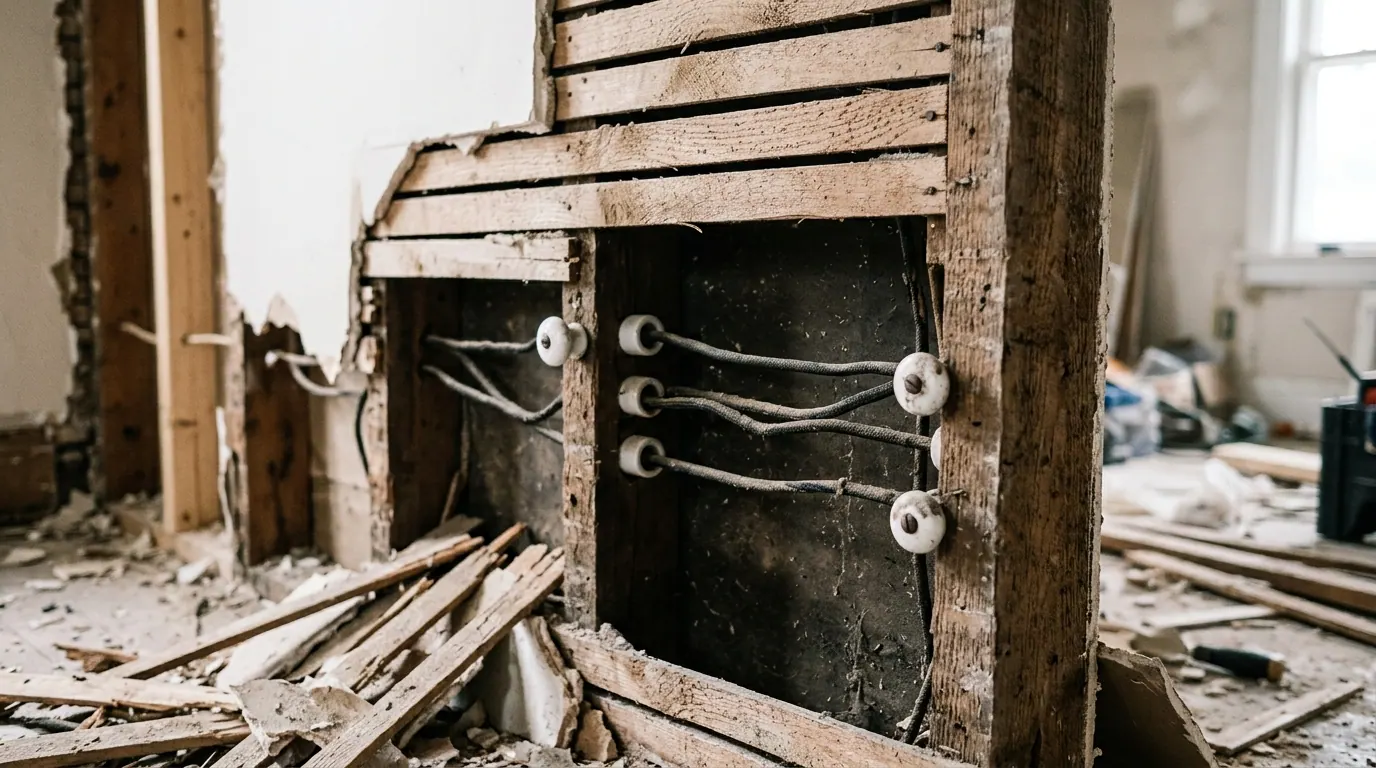
Generated (Gemini), via Wikimedia Commons
Finding knob-and-tube wiring after demo has already started is one of the most common surprises in older home renovations, and it almost always costs more than people hope. Plan on adding somewhere between $8,000 and $20,000+ to a whole-house rewire depending on size and accessibility, and plan on your timeline slipping by two to six weeks. It is not a reason to panic, but it is not something to patch over and ignore either.
What you need
- A licensed electrician with real experience in pre-1950s homes, not just new construction
- A contingency fund of 10-20% of your total renovation budget, held in reserve before demo even starts
- Contact information for your homeowners insurance agent
- A permit from your local building department, pulled before any new wiring goes in
- A budget line for drywall or plaster repair after the electrical work is done
- Patience, because this almost never moves as fast as the original schedule assumed
Step by step
- Stop work in that area. If a wall or ceiling is open and you can see the ceramic knobs and tubes, do not keep pulling insulation or wiring until someone qualified has looked at it. Knob-and-tube insulation is rated for open-air cooling, and burying it under blown-in insulation or foam is a known fire hazard. If a previous owner already did that, you want to know before you go further, not after.
- Get an electrician to assess scope. The first question is not "how much to rewire the house" but "how much of the house is still on knob-and-tube." Some houses were partially updated decades ago and only a few circuits are original. Others are almost entirely original behind newer-looking switch plates. This assessment usually takes one visit and should come with a written scope, not just a verbal guess.
- Call your insurance agent before you decide anything. A lot of homeowners insurers either won't write a policy on a house with active knob-and-tube or will require full replacement within a set window, often 30 to 90 days, to keep coverage. This is worth knowing before you commit to a partial fix, because a partial fix that doesn't satisfy your insurer isn't actually solving the problem.
- Decide between full rewire and partial, get real quotes, and rebuild the schedule. A full rewire on an occupied or mostly-open house typically runs $8,000 to $20,000 or more, with the low end for smaller homes where walls are already open from the renovation and the high end for larger homes needing finished walls opened up. A partial fix limited to one or two rooms or circuits can run a few thousand dollars but may not satisfy insurance requirements. Get at least two quotes in writing before you decide, and ask each electrician to break out labor, materials, and any drywall or plaster patching they include or exclude.
Where this goes wrong
The most common and most dangerous mistake is insulation added directly over knob-and-tube wiring by a previous owner trying to cut heating costs. The wiring is designed to dissipate heat into open air. Covering it traps heat and raises fire risk, and it's invisible until someone opens a wall or attic. If your home had an insulation upgrade at some point and you're now finding knob-and-tube, ask the electrician to check the attic and any insulated exterior walls specifically, not just the areas you've already opened.
Another failure mode is the partial, unpermitted patch job. Someone replaces the wiring in the kitchen because that's the room being renovated, leaves the rest of the house on knob-and-tube, and never pulls a permit for any of it. This can come back to bite you two ways: an insurance claim gets denied later because the work wasn't permitted and inspected, or a future buyer's inspector flags it and kills the sale or forces a price cut. If you're going to touch the wiring at all, pulling a permit protects you even if you're only doing part of the house.
A third problem is mixing wiring types incorrectly. Knob-and-tube cannot be legally spliced directly to modern romex or THHN wire inside a wall cavity without an accessible junction box, and in many jurisdictions it's not allowed at all. Contractors in a hurry sometimes do it anyway, buried behind new drywall where no inspector will ever see it. This is the kind of shortcut that shows up years later as an intermittent short, a tripped breaker nobody can diagnose, or in the worst case, a fire.
Underestimating what's behind closed walls is also common. If demo hasn't opened every wall, the actual extent of the knob-and-tube wiring is a guess until an electrician gets eyes on more of it. Budgets built on the assumption that "it's probably just this one section" get blown when the attic, the other half of the second floor, and the basement turn out to be original too.
When to stop and call someone
Do not splice knob-and-tube to modern wiring yourself, and do not attempt to extend or repair knob-and-tube circuits as a DIY project, even if you're comfortable with basic electrical work. The materials, the lack of a ground, and the specific code requirements around it are different enough from modern wiring that this is not a place to learn on the job.
If you find wiring buried under insulation, treat it as urgent. Get a licensed electrician out before you do anything else in that area, including running fans, space heaters, or anything that adds heat load near the suspect wiring.
And if your insurance company is involved, get their requirements in writing before you pay for any electrical work. Verbal assurances from an agent are not the same as a documented requirement, and you don't want to find out after the work is done that it didn't satisfy the policy.
This kind of mid-project surprise is exactly the gap between what shows up on paper and what actually happens on site, which is the whole reason Fixer Files exists: real numbers, real delays, no editing it down to fit a neat before-and-after.
Get the real numbers
Every renovation post includes the actual costs. Join the list and get each new breakdown as it goes up.
Join the list