What Is ARV and Why It Matters More Than Purchase Price
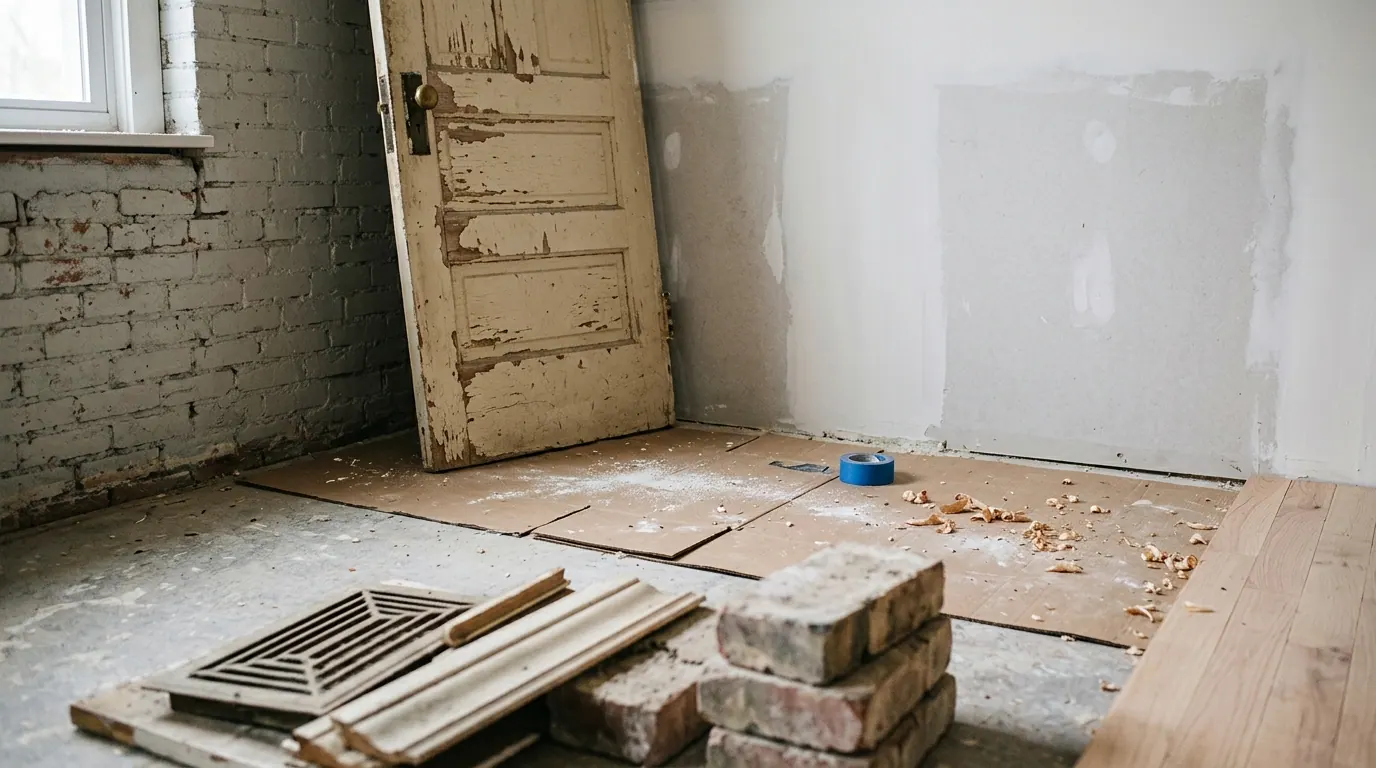
Generated (Gemini), via Wikimedia Commons
Here's the answer up front: ARV, or after-repair value, is what a property will be worth once the renovation is done. It matters more than purchase price because purchase price only tells you what you're spending today. ARV tells you whether spending it makes any sense at all. A house that costs $180,000 can be a great deal or a disaster depending on whether it will appraise for $260,000 or $210,000 after the work is done. Purchase price alone can't tell you that. ARV can.
If you're reading this because a deal you're excited about suddenly feels shaky, or a spreadsheet that looked great on paper is now making you nervous, you're probably running into an ARV problem, not a purchase price problem.
Most likely cause
The most common reason a flip's numbers fall apart is that the buyer never nailed down ARV before making an offer. They looked at the asking price, guessed at renovation cost, subtracted one from the other, and called the difference profit. That's not a plan, that's a hope.
Here's how to confirm this is what happened: ask yourself what number you used for the future sale price. If the honest answer is "I figured it would sell for around what the house down the street sold for" or "the listing agent mentioned a number," you don't have an ARV. You have a guess borrowed from someone else's guess.
A real ARV comes from actual comparable sales: similar homes, similar square footage, similar bed/bath count, sold recently (ideally within the last three to six months), and located close by (ideally within half a mile to a mile, closer in dense urban areas). Those comps then get adjusted up or down for condition, lot size, garage, and finish level. If you haven't done that work, the ARV you're using isn't real yet, and neither is your profit projection.
Less common causes
Sometimes the ARV work was attempted but still came out wrong. A few patterns show up again and again:
- Using stale or distant comps. A sale from 14 months ago, or a similar house three miles away in a different school zone, doesn't reflect what buyers will pay today in this specific pocket of the neighborhood. Confirm by checking sale dates and pulling up the comps on a map. If they're spread out or old, the ARV is soft.
- Confusing ARV with an automated estimate. Online valuation tools (the kind that spit out a number when you type in an address) are built on public records and algorithms, not on what the finished renovation will actually look like. They don't know you're adding a bathroom or opening up a wall. Confirm by comparing the online estimate to actual recent sales of renovated homes nearby. If the online number is higher than what renovated comps are fetching, it's optimistic.
- Ignoring the ceiling of the neighborhood. Every area has a price ceiling, the point where even a beautifully renovated house won't sell for more because buyers in that area won't pay it. Confirm by looking at the top sale prices in the immediate area over the last year. If nothing has sold above a certain number regardless of condition, your ARV should not exceed that number no matter how nice the renovation is.
How to fix it
Calculating a defensible ARV isn't complicated, but it takes some legwork. Here's the order to do it in:
- Pull three to six recent comps. Use a local MLS if you can get access through an agent, or public sale records. Look for homes sold in the last 3 to 6 months, within a mile, with similar square footage (within 15 to 20 percent), similar bed/bath count, and similar lot size.
- Adjust for condition and finish. If a comp sold fully renovated and yours will be renovated to a similar standard, it's a fair comparison. If a comp sold dated and yours will be updated, that comp sets a floor, not the target.
- Adjust for differences. Add or subtract value for things like an extra bathroom, a garage, a finished basement, or a bigger lot. Local agents or appraisers can give rough dollar adjustments for these; a common ballpark is $10,000 to $25,000 for an added full bathroom, but this varies a lot by market.
- Average the adjusted comps. That average, not the highest comp, is your ARV. Using the best comp in the group instead of the average is a common way people talk themselves into an inflated number.
- Work backward to a maximum offer. A widely used rule of thumb (the "70% rule") says: Maximum offer = (ARV x 0.70) minus renovation costs. It's a starting filter, not gospel, but it forces you to treat ARV as the anchor and purchase price as the thing that flexes, not the other way around.
- Get a second opinion before you commit. A local real estate agent who sells in that specific neighborhood, or a licensed appraiser doing a pre-purchase estimate, can sanity-check your comps for $100 to $500. That's cheap insurance compared to being wrong by $30,000 on a renovation budget.
Once you have a real ARV, purchase price becomes a much smaller decision. You're not asking "is this price fair?" You're asking "does this price leave enough room between what I'll spend and what I'll get back?" That's a much easier question to answer honestly.
When it is not worth fixing
Sometimes the math simply doesn't work, and no amount of clever budgeting changes that. A few honest signs it's time to walk away:
- The neighborhood ceiling is close to what unrenovated comps already sell for. If a dated house and a renovated house sell for close to the same price in that area, the renovation dollars aren't buying you anything. This happens in areas where buyers are more price-sensitive than finish-sensitive.
- Renovation costs plus purchase price plus holding costs (loan interest, insurance, utilities, property taxes while you own it) leave less than a 10 to 15 percent margin against ARV. That's a thin cushion, and renovations almost always run over budget by some amount, commonly 10 to 20 percent even on a well-planned job.
- The comps you're relying on are inconsistent, meaning some sold high and some sold low with no clear pattern tied to condition. That kind of noisy market makes ARV unreliable no matter how careful your math is, and unreliable ARV means unreliable profit.
In any of these cases, the right move isn't to renovate harder or cut corners to make the numbers work. It's to pass on the property, or renegotiate the purchase price down until the math has real room in it. A deal that only works if every assumption goes perfectly isn't a deal, it's a bet.
We built Fixer Files around exactly this kind of number: not the glossy after photos, but whether the after-repair value actually covered the cost of getting there.
Get the real numbers
Every renovation post includes the actual costs. Join the list and get each new breakdown as it goes up.
Join the list