Winter Renovations: What Slows Down and What Costs More
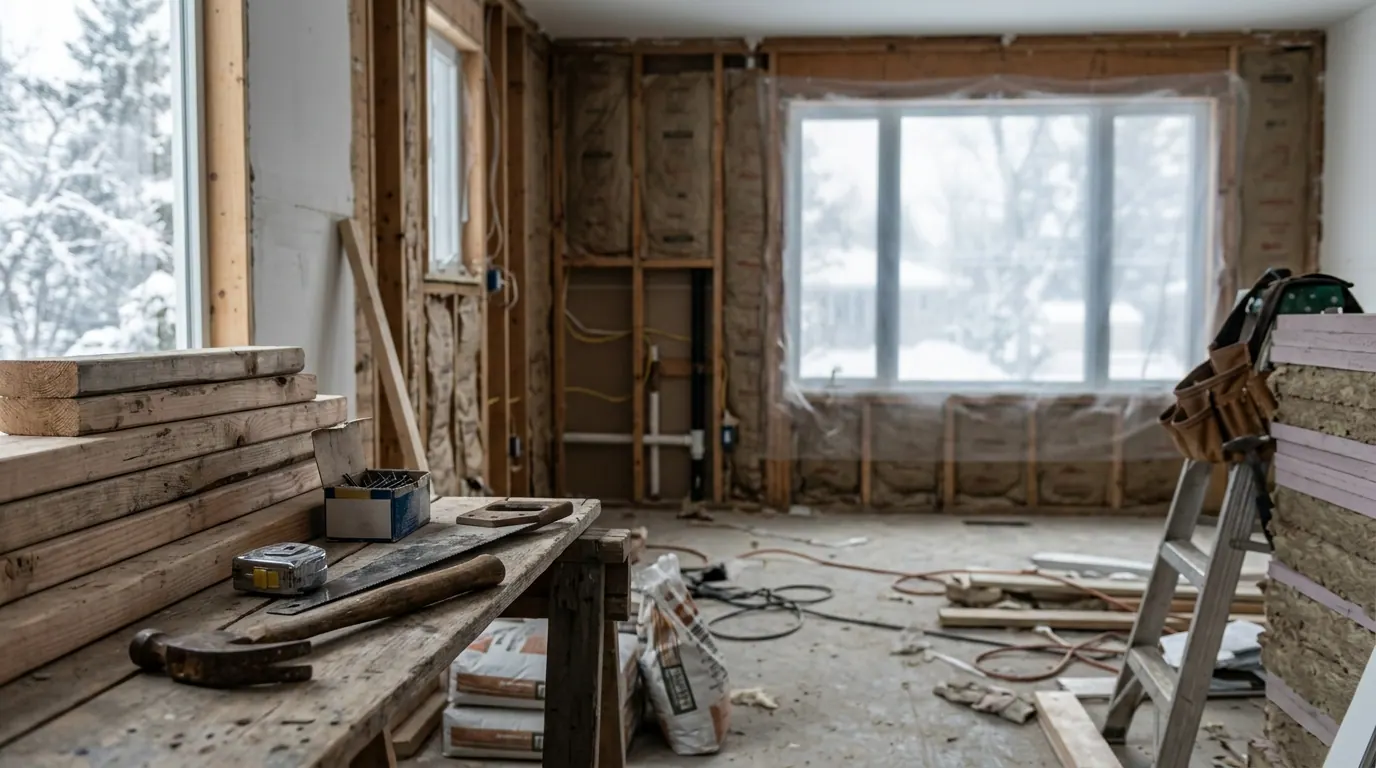
Generated (Gemini), via Wikimedia Commons
This is for anyone planning a renovation that will run through the cold months, whether that's by choice or because the project ran long. The short version: winter doesn't make renovation impossible, it makes some work slower, some materials pickier, and some line items more expensive. The single most important decision is whether your project depends on the building envelope being open or exposed to outside air. Everything else follows from that.
Decide this first
Ask one question before you schedule anything: does this job require the outside of the house, or the inside air, to be exposed to winter temperatures at some point? Roofing, siding, exterior painting, concrete work, window and door replacement, and anything that opens up exterior walls all fall into this category. A kitchen remodel that stays inside four finished walls with working heat mostly doesn't. If your project is envelope-dependent, winter changes your schedule and your budget in real ways. If it's purely interior with heat running, winter mostly just changes who's available to do the work and how fast materials cure.
What to look for
Which trades actually stop or slow down
Concrete won't cure properly below about 40°F without extra measures, so foundation work, driveways, and slab pours either need insulated blankets and heaters or they wait. Roofing shingles get brittle and harder to seal in cold weather, and some manufacturers won't warranty installs below a certain temperature, often somewhere in the 40s. Exterior paint and many caulks and sealants have minimum application temperatures printed right on the label, usually 35-50°F depending on the product, and painting outside that range risks poor adhesion that shows up as peeling next summer. Roughly speaking, expect any exterior trade to either add cost for cold-weather workarounds or slip your schedule by weeks while everyone waits for a stretch of decent weather.
Material behavior in cold
Lumber delivered in winter can have different moisture content than in summer, and framing crews sometimes need to account for that with fasteners and drying time. Adhesives, thin-set mortar, and grout all cure slower in cold spaces, which can push back tile and flooring schedules by a few days per phase. Drywall mud dries slower without adequate heat, and rushing it leads to cracking at the seams later. None of this is dramatic on its own, but it adds up: a bathroom remodel that would take three weeks in July might take four in January just from cure-time stacking.
Temporary heat and site protection costs
If walls are open, or a job involves working in an unheated garage, basement, or addition, you're likely paying for temporary heaters, sometimes with a contractor markup, plus the fuel or electricity to run them. For a mid-size renovation this can add anywhere from a few hundred to a couple thousand dollars over the course of a winter job, depending on how long the space stays exposed and how cold it gets. Contractors doing exterior work in snow country also budget for tarping, snow removal from work areas, and sometimes scaffolding modifications so ice doesn't become a liability. These aren't optional add-ons, they're the cost of doing the work safely and correctly, and a contractor who doesn't mention them in a winter bid is either inexperienced or leaving it out to win the quote.
What to ignore
Skip any pitch that frames winter renovation as basically free of tradeoffs because a contractor uses "cold-weather rated" materials. Some products genuinely have cold-weather formulations, most notably some concrete admixtures and a few sealants, but for most of the job this is marketing language layered over normal best practice, not a special product that erases the calendar. Also ignore blanket claims that winter is always cheaper because contractors are slower. It's true that many trades have more schedule flexibility in winter and interior-only jobs can sometimes get a better price or faster start, but that has nothing to do with the physical realities of cold weather on materials, and it doesn't apply at all to exterior work, where winter usually costs more, not less.
Common mistakes
The most common mistake is scheduling exterior work for late fall without a buffer and assuming it'll wrap up before the cold hits. Weather doesn't care about a construction schedule, and a two-week delay from an early cold snap or an ice storm can push roofing or siding into a season where the work either can't happen or costs more to do properly. Anyone planning exterior work in October or November should build in at least a few weeks of slack, and should ask the contractor directly what happens to the timeline and the price if temperatures drop before the work is done.
Another mistake is opening up walls or ceilings during winter without confirming the space will stay heated the whole time. Homeowners sometimes tear into a project, discover more damage than expected, and then wait on a permit, an inspection, or a material delivery while the house sits with exposed framing in cold weather. Beyond the discomfort, this risks frozen pipes if plumbing is anywhere near the opened area, and it slows every cure-dependent step that follows, like drywall and paint. If there's any chance a project will stall mid-demo, winter is the season where that stall costs the most.
A third mistake, more common with first-time flippers, is assuming winter labor is automatically cheap and fast because the trades have less on their books. Sometimes that's true for interior finish work. But specialty subs who do exterior work, like roofers or masons, often have smaller winter crews and higher per-job rates specifically because conditions are harder and jobs take longer, so pricing can go the other way. The right move is to ask for the actual winter rate, not assume a seasonal discount that may not exist for that particular trade.
FAQ
Does renovating in winter cost more overall?
It depends on the project. For interior-only work with reliable heat, winter costs are close to neutral and sometimes slightly lower because some trades have more open schedule. For anything touching the exterior or requiring the envelope to be open, expect real added cost from temporary heat, weather delays, and cold-weather workarounds for materials like concrete and roofing. As a rough range, budget an extra 5-15% on exterior-dependent phases for winter contingencies, and treat that as a planning number, not a guarantee.
Should I just wait until spring?
If the project is purely cosmetic and not urgent, waiting for better weather often saves money and headaches, especially for roofing, siding, concrete, and exterior painting. If the work is addressing an active problem, like a failing roof, a cracked foundation, or no working heat, waiting isn't really an option regardless of season, and the right move is to get a contractor experienced in winter conditions rather than delaying repairs that will only get worse. For interior remodels with no exterior component, there's usually no strong reason to wait for spring at all.
Fixer Files tracks these kinds of scheduling and cost tradeoffs across real renovation projects, and winter timing is one of the more consistent variables that catches first-time renovators off guard. The fix isn't avoiding winter work entirely, it's pricing in the slowdowns before they happen instead of discovering them mid-project.
Get the real numbers
Every renovation post includes the actual costs. Join the list and get each new breakdown as it goes up.
Join the list