Window Replacement Costs: When It's Worth It and When It's Not
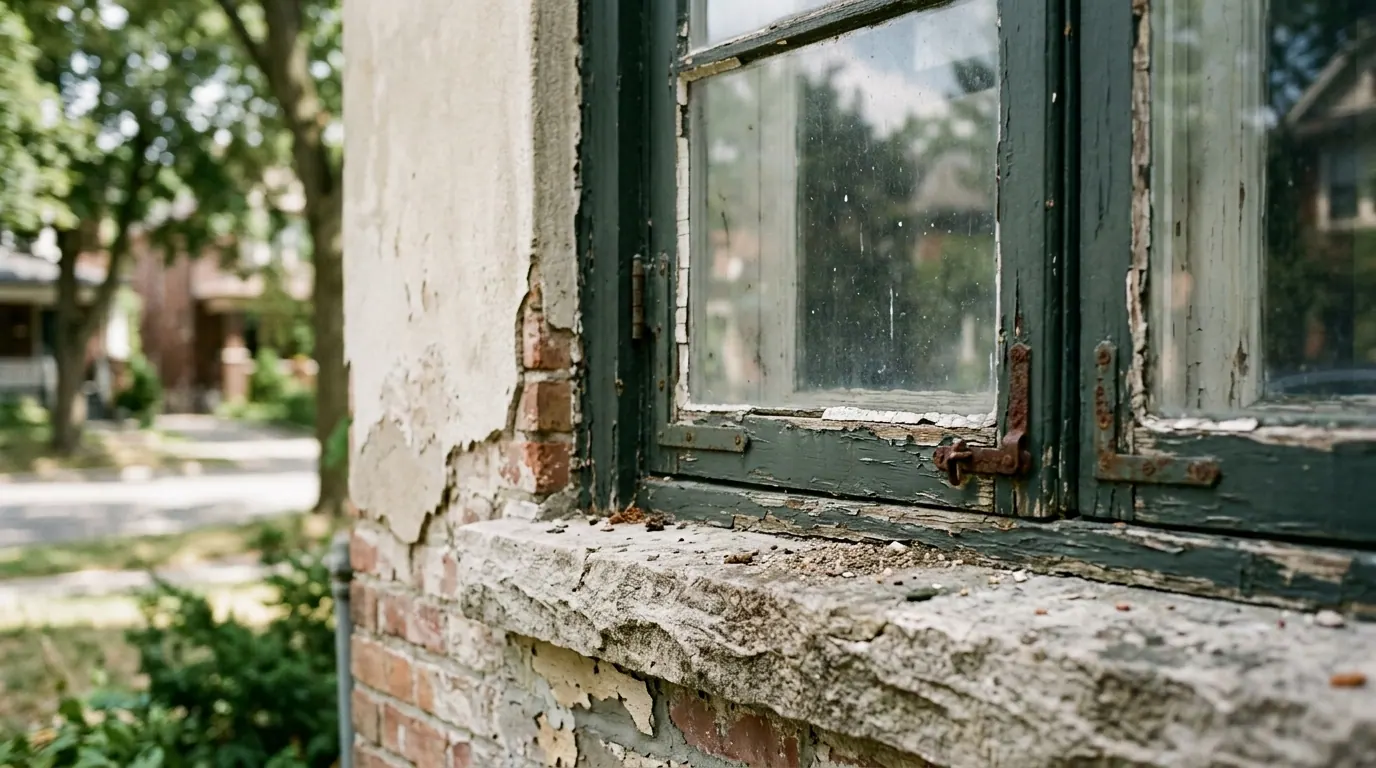
Generated (Gemini), via Wikimedia Commons
Full window replacement usually costs $450 to $1,200 per window installed, and it rarely pays for itself in energy savings alone. It can pay off in a flip if the old windows are visibly shot, but if they're just old and a little drafty, air sealing and storm windows will often get you 80% of the benefit for a fraction of the cost.
Key takeaways
- Vinyl replacement windows run $450 to $900 installed, wood or fiberglass can run $800 to $1,800 or more per window.
- Energy savings from new windows rarely exceed $100 to $300 a year for a typical house, so payback periods often run 15 to 30 years.
- Resale value recoups roughly 60 to 70% of cost on average, similar to many midrange remodeling projects, not a guaranteed profit center.
- Rot, failed seals, and broken sash cords are repair problems, not automatic replacement triggers.
- If more than half the windows in a house have the same failure, batching the job as one project usually beats doing them one at a time.
Do new windows actually save money on energy bills?
Not as much as the sales pitch suggests. Windows are a meaningful source of heat loss, but they're usually not the biggest one. Air leaks around the house, insulation gaps in the attic, and an old furnace or AC unit typically cost more in wasted energy than old windows do. The U.S. Department of Energy's own estimates put typical savings from replacing single-pane windows with efficient double-pane ones at somewhere in the range of $125 to $465 a year, depending on climate and house size, and that's the high end of the range, for single-pane to high-efficiency double-pane. If you're going from already-decent double-pane windows to new double-pane windows, the savings drop closer to $50 to $150 a year.
Do the math on that. At $600 per window installed and ten windows, you're at $6,000. Even at $400 a year in savings, that's a 15-year payback. Many houses won't see savings anywhere near that high. This is why window replacement for energy savings alone is a weak argument in most houses. It's a good argument in a house with genuinely bad windows: single-pane glass, metal frames with no thermal break, visible daylight around the sash, or windows that won't stay open or closed anymore.
Where the energy case gets stronger is in extreme climates, houses heated with electric resistance or propane (expensive fuels), and windows that are failing badly enough to let in outside air directly, not just conduct heat through the glass. A failed double-pane seal that's fogged and full of condensation is losing its insulating gas fill and performing close to single-pane. That's a real problem. A window that's just old but sealed tight and operating fine is mostly a cosmetic and comfort issue, not a big energy one.
If the real goal is lower bills, an energy audit before you touch the windows is worth the $200 to $400 it usually costs. It'll often point you toward air sealing, attic insulation, or duct sealing as the better first dollar spent, with windows further down the list.
What does window replacement actually cost, broken down
Costs vary a lot by material, size, and whether it's a straightforward swap or a more involved job. Rough ranges, installed, per window, for a standard double-hung or casement window in a typical opening:
- Vinyl: $450 to $900. This is the most common choice for replacement and flips. Decent quality, low maintenance, no painting.
- Fiberglass: $800 to $1,500. More durable and stable than vinyl, better for larger openings, pricier.
- Wood (with exterior cladding): $1,000 to $2,000+. Common in higher-end or historic-style homes where appearance matters.
- Aluminum: $400 to $800, less common in homes now outside of certain regions and styles, poor insulator unless thermally broken.
Those numbers assume a standard "pocket" or "insert" replacement, where the new window frame goes into the existing opening and the old sash and frame stay in the wall. This is the cheaper, faster, more common approach for most jobs. A full-frame replacement, where the installer tears out down to the rough opening, including exterior trim and sometimes siding, costs more, often an extra $150 to $400 per window, and is used when the old frame is rotted or the opening needs to be resized.
Bay windows, large picture windows, oddly shaped or custom-sized openings, and anything requiring structural work (like converting a small window to a larger one) can run $2,000 to $5,000 or more for a single opening. If you're quoting a whole-house job, ten to fifteen windows, expect a range from roughly $6,000 on the low end (vinyl, pocket replacement, modest house) to $20,000-plus for a larger house with pricier materials or full-frame work. Get three quotes. Window pricing varies more between contractors than almost any other trade, partly because of brand markups and partly because install labor rates differ a lot by region.
When repair beats replacement
A lot of window problems are fixable for far less than replacement cost, and the repair route is underused because replacement is what gets advertised. Common fixable issues:
- Broken sash cords or balances on old double-hung windows, usually $50 to $150 per window for a handyman or window specialist to fix.
- Glazing putty failure on wood windows, where the glass rattles or the putty is cracked and falling out. This is a weekend DIY job with a putty knife and glazing compound, or $75 to $150 per window if hired out.
- Weatherstripping replacement to cut drafts, usually under $20 in materials per window if you do it yourself, or $30 to $75 per window hired out.
- Stuck or painted-shut sashes, often just needs the paint seal cut and the channels cleaned, an hour or two of work.
- Storm windows added over existing single-pane windows. This is the classic cheap fix, often $100 to $300 per window installed, and it can bring single-pane performance close to double-pane without replacing anything. Good option for older or historic homes where the original windows have character worth keeping.
What commonly goes wrong with the repair approach: people patch a window that has actual wood rot in the frame or sill, not just a cosmetic issue. Painting over soft, rotted wood looks fine for a year and then fails again, sometimes worse, because moisture got sealed in rather than dried out. Before doing a cheap fix, press a screwdriver into the sill and frame. If it sinks in soft wood, that's rot, and no amount of caulk or paint solves it. At that point you're either doing a real wood repair with epoxy consolidant and dutchman patches (doable, but skilled work, often $150 to $400 per window) or you're looking at replacement.
What actually moves resale value
Remodeling cost-value studies (the kind published annually by industry trade groups) consistently show window replacement recouping somewhere around 60 to 70% of its cost at resale, which puts it in the same tier as a lot of midrange remodeling work, not a standout. It's not a project that pays for itself in a sale. What it does is remove a red flag. Buyers and home inspectors notice: foggy double-pane glass, windows painted shut, visible rot around frames, broken screens, and mismatched window styles from room to room. Those things don't kill a sale on their own, but they chip away at buyer confidence and give room for lowball offers or inspection-repair requests.
For a flip specifically, the calculation is different from a primary residence. You're not living there to enjoy lower energy bills over fifteen years. You care about what gets the house sold faster and at a better price. New windows photograph well and read as "updated" on a listing, which matters, but buyers rarely ask about window brand or U-factor. What they do notice is foggy glass, drafts they can feel standing near a window, and anything that looks obviously old next to otherwise updated finishes. If the existing windows are intact, operate fine, and don't look dated, that budget is usually better spent on kitchens, bathrooms, and paint, which move the needle more per dollar in a sale.
Replace windows in a flip when: multiple panes are fogged, frames are visibly rotted or damaged, the style badly clashes with an otherwise updated house (think 1980s brown aluminum sliders in a house you've modernized), or local comps in your price range consistently have updated windows and yours don't. Skip or defer replacement when the windows are functional, reasonably recent, and the look is neutral enough not to stand out.
How to decide for your own house
Walk the house and sort each window into one of three buckets. First: fine, no action needed, meaning it opens, closes, seals, and the glass is clear. Second: repairable, meaning the glass or frame is sound but hardware, weatherstripping, or glazing has failed. Third: replace, meaning there's visible rot, broken or unrepairable frames, failed double-pane seals with permanent fogging, or single-pane glass in a climate where that's a real comfort and cost problem.
Count how many windows land in each bucket. If it's mostly bucket one and two, you're looking at a repair budget of a few hundred to low thousands of dollars total, done over a weekend or two or hired out cheaply. If more than half the house is in bucket three, it usually makes sense to do them all at once rather than one at a time over several years. Contractors price whole-house jobs better per window than one-offs, and you avoid paying a trip charge and setup cost repeatedly.
One more practical point: don't mix old and new windows in the same visible wall or elevation if you can avoid it. A house with three new vinyl windows and two old wood ones on the same front facade looks unfinished and patched together, even if every individual window is in good shape. If budget forces a phased approach, phase by room or by side of the house, not window by window on the same wall.
FAQ
Is it cheaper to replace just the glass instead of the whole window?
Sometimes. If the frame and sash are sound and only the glass unit has failed (fogged double-pane, for example), a glass-only replacement can run $100 to $300 per window versus $450-plus for a full window, and keeps the original frame and trim. Not every window style supports this, so ask a glass shop or window contractor to check before assuming.
How long do new windows actually last?
Vinyl windows are generally rated for 20 to 30 years, though seals and hardware can fail sooner in harsh climates or poor installs. Wood windows with good maintenance can last 30 to 50-plus years, which is part of why older wood windows are often worth repairing rather than replacing. Fiberglass tends to hold up longest with the least maintenance.
Does window brand matter much?
Less than installation quality does. A midrange window installed correctly, with proper flashing and insulation around the frame, will outperform a premium window installed poorly. If you're hiring out, ask how the installer handles flashing and insulation at the rough opening, not just which brand they carry.
Bottom line
Window replacement is a comfort and durability investment more than a pure financial one. It rarely pays for itself in energy savings within a normal ownership period, and at resale it recoups cost at roughly the same rate as other midrange remodeling work, nothing special. The cases where it clearly makes sense are failed seals, rot, and windows that are visibly dragging down an otherwise updated house. Everywhere else, a repair, some new weatherstripping, or a storm window is the more honest answer, and the one that actually fits a real renovation budget rather than a TV-show one. That's the kind of math we try to run on every project here at Fixer Files.
Get the real numbers
Every renovation post includes the actual costs. Join the list and get each new breakdown as it goes up.
Join the list